Contents
- Crafting the Lore of a Three-Legged Dog
- The Crucial Workshop Phase and Early Readings
- Scaling the Production: NAMT and Regional Theater
- Pioneering Virtual Frontiers and Producer Mints
- Culmination: The Great Homecoming Event
Crafting the Lore of a Three-Legged Dog
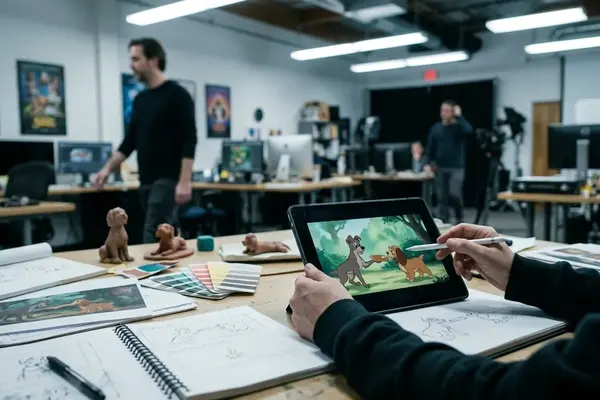
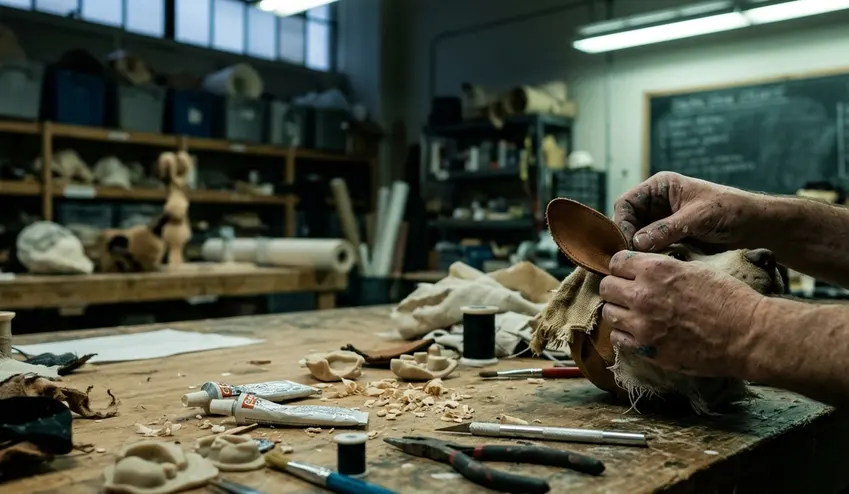
When I first looked at the structural requirements for PUP! A Chew Story, I knew the scenic mechanics had to reflect a specific emotional grammar. How do you build a dark comedy around a missing limb without reducing the character to a visual punchline?
Iterations demonstrate that PUP! is not a mascot. He possesses distinct dramatic agency. Marcus Terrell Smith, credited with Book & Lyrics, and Robin Schäfer, handling Music & Arrangements, built a world where the missing leg drives the narrative. Schäfer brought a proven compositional rigor to the project, having transitioned from session musician work toward full-time music practice in 2018.
The overarching genre frames itself as a dark comedy musical. Pet adoption advocacy remains built directly into its public-facing identity.
The Crucial Workshop Phase and Early Readings
Theatrical development relies heavily on the workshop phase to pressure test the book, lyrics, and score. You cannot treat a piece as a finished production until actors inhabit the space and audiences react in real time.

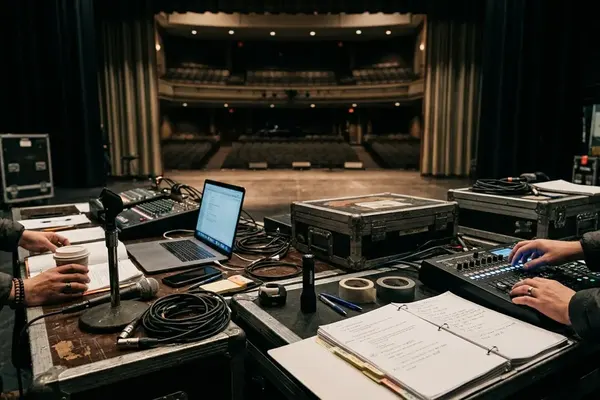
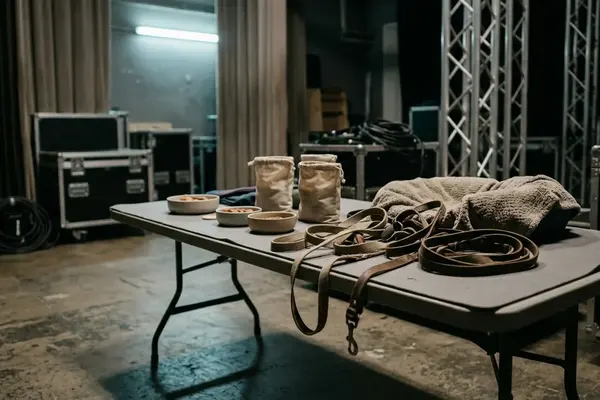
We took the project to The Broadwater Theater in Los Angeles for its first public staged reading. On August 27-28, 2021, the creative team listened closely to the room. Audience response shows where pacing issues emerge. We identified unclear character stakes and moments where lyric density interfered with comprehension. As a technical director, I watch how the physical space supports these early iterations.
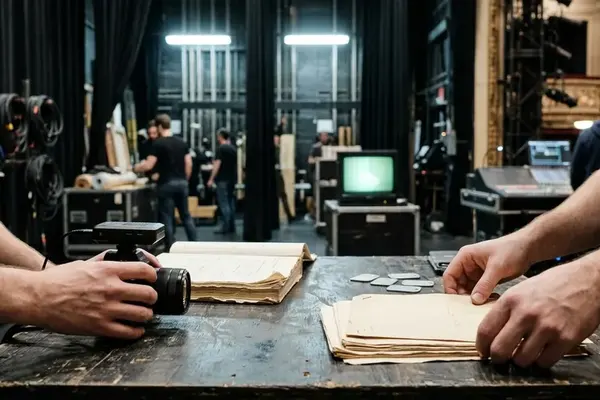
Field Note: The bare-bones staging forces the story to stand on its own structural integrity—a crucial test before heavy scenic elements arrive.
Scaling the Production: NAMT and Regional Theater
Scaling a show means scaling its physical footprint. After the early reading phase, the development strategy shifted toward industry-facing visibility.
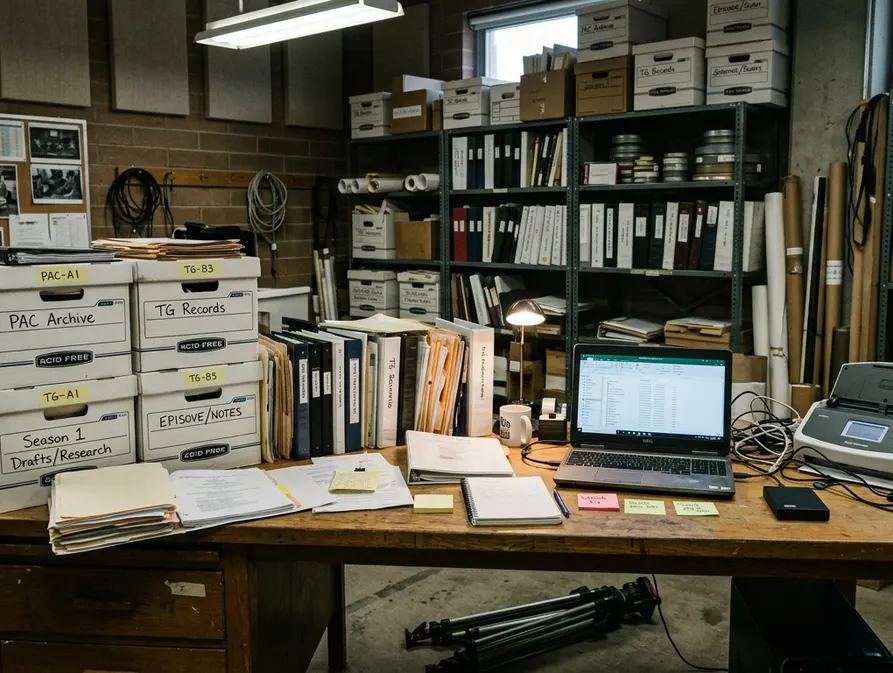
The project secured inclusion in the 34th annual festival organized by the National Alliance of Musical Theatre. Presenting at New World Stages in New York City provided a critical industry showcase milestone. Rather than immediately chasing a guaranteed commercial staging, the team targeted regional theater as the practical next step for professional productions outside New York.
Aspirational benchmarks exist in the industry. A production like the Book of Mormon reached a scale large enough to support six concurrent tours. While regional touring models offer a reliable scaling path, their success remains strictly dependent on the physical constraints of the host venues. A concept depending on unusually expensive spectacle struggles to follow this route. The regional-theater path requires manageable casting, design, and technical requirements.
Pioneering Virtual Frontiers and Producer Mints
Traditional theater development relies mainly on private investors, venue access, and geographically limited attendance. This project challenged that model.
The funding strategy widened access to theatrical participation rather than keeping producing power entirely inside a closed circle of backers. The team developed the Producer Mint. This certified NFT-based investment approach tied directly to theatrical backing. Live virtual performances were positioned for Metaverse presentation alongside the project’s physical theater development.
Important: Critical review reveals that democratizing theatrical backing changes how audiences invest emotionally in a production long before opening night.
Culmination: The Great Homecoming Event
Theatrical roadmaps often end at the stage door. The Great Homecoming event, held on September 8-9, 2022, brought the project’s identity back to its core advocacy purpose.
The event paired performance culture with pet adoption visibility. It served as a living extension of the story rather than a mere epilogue to development. Pet adoption advocacy formed the through-line between PUP! as a theatrical character and the event’s public-facing mission.
Bottom Line: Community feedback confirms that the production history now holds a unique archival footprint. It spans early readings, industry showcase positioning, digital funding experimentation, virtual performance ambitions, and a live homecoming event.