The Billion-Dollar Broadway Barrier
The house lights dim, the overture swells, and the audience settles in for the magic of live theatre. Most patrons know the marquee titles—shows like The Book of Mormon or Wicked,but very few understand the capital table operating behind the curtain. Traditional Broadway offerings commonly route investment through a production entity. Investors buy fractional units rather than owning the show itself.
A standard commercial-theatre profit waterfall often gives the investor pool half of net profits after recoupment. The producer-side participants share the remaining producer profit pool. Minimum checks in commercial theatre offerings are often large enough that participation is handled through accredited-investor relationships, attorney-reviewed subscription documents, and producer introductions.
In practice, this structure keeps everyday arts patrons and musical theatre enthusiasts out of the producer's seat. The barrier to entry remains exceptionally high.
Decoding Theatrical Capitalization and Recoupment
Finding the optimal balance between creative ambition and financial reality begins with capitalization. To understand how new funding models work, one must first look at how a producer builds a budget.
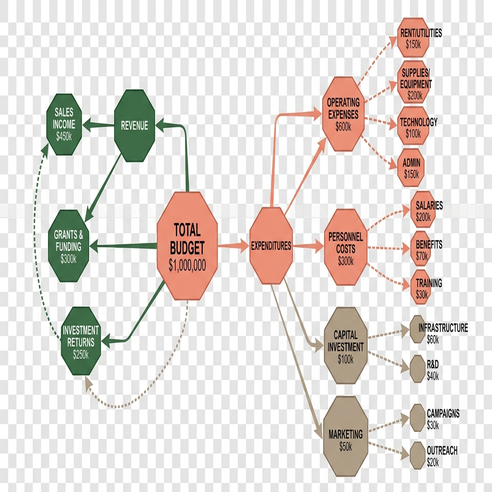
Capitalization is the raised production budget covering pre-opening costs. It pays for creative fees, rehearsal payroll, design builds, deposits, marketing launch spend, insurance, legal work, and contingency. Once performances begin, the focus shifts to operating expenses. These are the recurring weekly costs paid before profit is calculated. A production must cover theatre rent, crew payroll, musicians, stage management, advertising maintenance, insurance, ticketing charges, general management, and company management.
Recoupment occurs only when cumulative available operating surplus has returned the full original capitalization to the investor pool. It is not triggered by opening night, strong reviews, or a sold-out weekend. The math is unforgiving.
How Blockchain Democratizes Theatrical Units
The familiar theatrical unit is now finding a new home on the blockchain. A theatrical unit can be represented as a digital asset whose wallet address, token identifier, and ownership history are visible on a public blockchain explorer.
Ethereum supports unique-token issuance through the proven ERC-721 token standard. Solana-style implementations achieve similar holder verification using chain-native token accounts and metadata conventions. IPFS acts as a decentralized media-addressing layer for token artwork or supporting files. It is crucial to understand that IPFS is not the legal investment contract itself.
The legal rights still need to come from the offering documents, subscription agreement, or membership terms. The token serves as the access and verification layer, not a replacement for securities compliance. A token may verify community access immediately while any investment-related rights depend on separately accepted legal documents.
Step-by-Step: Acquiring PACS NFTs
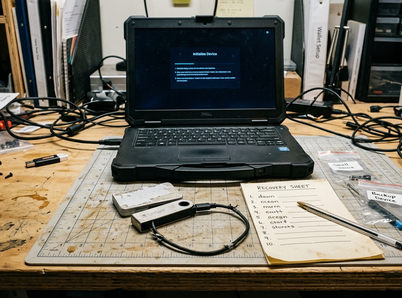
Acquiring a token requires a compliance-aware intake sequence. A supported wallet setup, such as Coinbase or Metamask, should include recording the recovery phrase offline. Users must enable device-level authentication and test access with a small non-investment transaction before attempting a purchase.
Collection verification is the next critical step. Buyers should match the official PACS collection link from the project site and check the contract or mint address. Confirm that the token metadata names the certified Broadway Tripaw NFT collection rather than a look-alike listing.
Important: A reader who buys a visually similar NFT from an unofficial collection receives no Producer Circle access because the wallet does not hold a recognized PACS token.
After purchase, the holder should retain the transaction hash, token ID, wallet address used, and timestamp of acquisition for later membership verification. For Pup! A Chew Story, the token acts as the digital counterpart to a theatrical participation unit only to the extent stated in the project’s official terms and offering materials.
PACS NFT Funding Readiness Checklist
- Read the official PACS terms and any offering or membership documents before connecting a wallet.
- Confirm the official collection link from the project site rather than through search results or unsolicited messages.
Unlocking the Producer Circle and Dog Park
Financial participation opens the door to deeper belonging. Producer Circle access is gated by asking the holder to connect the same wallet that contains the PACS token. The system checks token ownership at login.
Once verified, holders enter the Dog Park. This digital area provides rehearsal-room dispatches, adoption-partner spotlights, production calendar notes, and holder-only announcements tied to Pup! A Chew Story. Tangible perks extend to the physical theatre. VIP house seats are request-based inventory. They typically require advance coordination with the production office or ticketing contact rather than instant guaranteed seating.
Field Note: A holder might assume house seats are automatic for any performance, but the production can only confirm them after checking date-specific inventory and internal ticket holds.
A practical fulfillment flow captures the performance date, number of seats requested, holder wallet address, token ID, and preferred contact method before confirming availability.
Scope and Limitations of Theatrical Investing
Enthusiasm for a project must be balanced with underwriting discipline. Entertainment investments can lose money even when the show is artistically strong, well-reviewed, or beloved by a niche community.
Operating expenses are paid before profit distributions. A production can have active ticket sales and still produce no distributable profit if weekly costs absorb the revenue. Investor repayment depends entirely on the show generating enough cumulative surplus over its run to return the original capitalization.
Bottom Line: This model is suitable for readers evaluating a high-risk arts investment with proper legal, tax, and financial review; it should not be treated like buying ordinary merchandise or a guaranteed-yield asset.