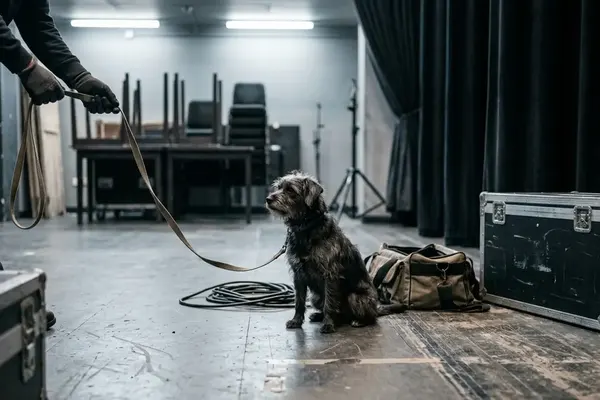
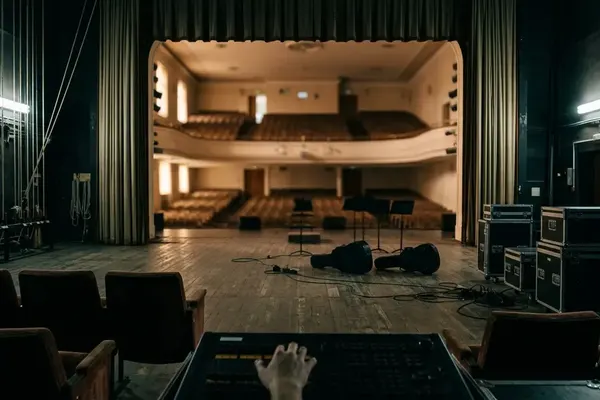
Los Angeles has long treated the stage as more than a place to sit still and clap. When a musical comedy about rescue dogs shares a city with touring juggernauts and storefront experiments, the question is no longer whether art can move people—it is how deliberately a production turns that movement into a home for a shelter animal.
Contents
- The Historical Precedent for Cause-Driven Stages
- The Mechanics of Integrating Rescue and Narrative
- Evaluating the Impact on Audience Empathy and Action
- Implications for Future Arts Programming
- Beyond the Curtain Call
The Historical Precedent for Cause-Driven Stages
Walk the dated playbills and production photographs from the late 2000s through the early 2020s and a pattern appears without a single founding moment. Los Angeles theatre shifted, show by show, from pure diversion toward civic intervention. Some nights still sold spectacle. Others began to treat the house as a room where belonging could be rehearsed in public.
Live animals on stage once arrived as novelty. A dog crossed for a laugh. A handler waited in the wings. Press coverage filed the moment under charm.
That classification does not hold once rescue organizations enter the production record as partners rather than props. Drawing on archive windows of playbills, press clips, and rescue-partner posts across that same span, the distinction becomes practical: an appearance counts as spectacle when the animal serves only the gag; it counts as advocacy when the record names a rescue role—supplying handlers, presenting adoptable dogs, screening applicants, or receiving event proceeds.
The turning point was not a manifesto. It was a series of producers who noticed that the emotional charge already built into a story of care could outlast the blackout if a real organization stood in the lobby. Local rescues stopped being thanked in a program note and started holding the clipboard. Partnerships that recurred across seasons, rather than one-off photo calls, marked the change more clearly than any single premiere.
In a city that can host everything from a satirical touring hit like Book of Mormon to intimate original work about shelter life, the stage learned a second job: keep the craft honest, then open a door the audience can walk through with a leash.
The Mechanics of Integrating Rescue and Narrative
The hard part is structural. Artistic integrity wants theme, rhythm, and a climax that earns its silence. Advocacy wants a clear next step. Force them into the same beat and both thin out.
Producers who treat the problem from first principles separate the dramatic function from the adoption function. The script carries belonging, loss, and care. The lobby carries biographies, handlers, and applications. One builds feeling; the other gives that feeling a name and a face that needs a couch.
Lobby logistics that protect the animals
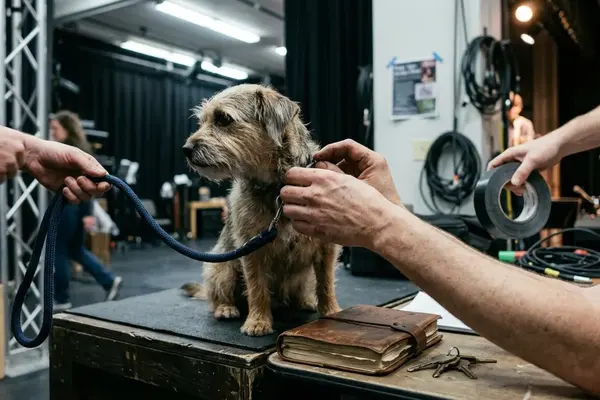
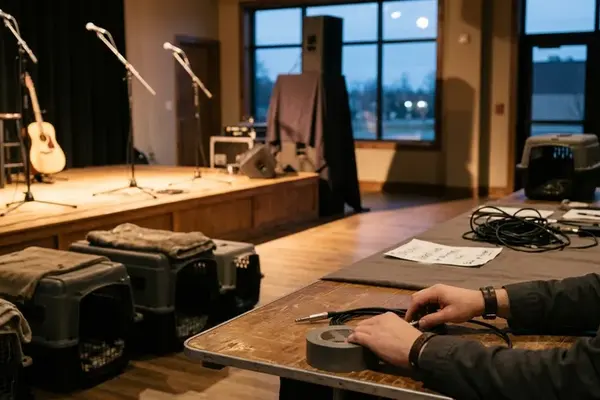
A workable lobby plan is almost boring in its specificity. Each dog gets one designated handler, a water bowl, a non-slip resting area, and a retreat space outside the main traffic lane. Dogs are not passed among patrons. They are not taken backstage without prior clearance.
Arrival timing matters. Animals come in around an hour before lobby access, settle through a ten- to fifteen-minute acclimation window, and pass a welfare check before doors open to the house. That sequence is not atmosphere. It is how a production keeps the advocacy from becoming another form of stress.
Field Note: Keep the adoption explanation outside the dramatic climax. A curtain-call statement of roughly a minute or two can point patrons toward staffed tables or performance-specific QR links without turning the final scene into an application pitch.
Weaving rescue into the narrative, then, means trusting theme over product placement. A character learns what home costs. The audience feels the cost. After the bow, the rescue table answers the question the fiction raised. Artistic rigor holds when the script refuses to become a brochure and the lobby refuses to become an afterthought.
The catch: placing several dogs beside a congested exit can produce noise, blocked egress, handler distraction, and stressed animals even when the performance itself earns an enthusiastic response. A small black-box lobby may support only scheduled introductions in a separate room; a larger venue can hold multiple staffed stations and a defined quiet zone. Match the activation to the architecture, not to the ambition of the curtain speech.
Evaluating the Impact on Audience Empathy and Action
Musical theatre works on attention the way a well-cut scene works on breath. Shared song, visible stakes, and a room full of strangers laughing at the same beat lower the distance between watcher and watched. Research on the psychological mechanisms of narrative empathy helps explain why a story about care can prime prosocial impulse before anyone reaches the lobby.
Impulse is not placement.
Measure action in stages. Applause is not evidence of adoption. What can be observed, performance by performance, is a sequence: attention during the show, a lobby conversation after curtain call, review of an individual dog’s profile, and an application submitted after the patron leaves the venue. Separate QR destinations for each performance or weekend keep theatre-generated inquiries from blending into the rescue’s ordinary social or search traffic. A follow-up window of one to two weeks captures considered applications without pretending that screening, household introductions, or placement finish under the marquee.
Booth conversations and QR visits, reconciled with applications inside that window, tell a clearer story than a full house alone. Qualitative shifts show up as patrons who stop treating the rescue table like merch and start asking about household fit, other animals, and time. Passive spectatorship loosens. Community participation begins—still unfinished, still contingent.
Theatrical events can generate immediate emotional engagement and application surges; long-term adoption success still depends on the partnering rescue’s vetting, meet-and-greets, and post-adoption support, which no curtain call can shortcut.
Bottom Line: The stage can move a person to the table. Only the rescue’s process can move a dog into a lasting home.
Implications for Future Arts Programming
Traditional arts funding often splits audience development from philanthropic storytelling. Sell the seat. Thank the donor. Keep the mission brochure in another folder. The hybrid model links two budgets on purpose. The artistic budget covers performers, musicians, rights, design, and venue labor. The activation budget covers handlers, materials, insurance review tied to animals on site, and the staff hours that make the lobby humane.
Hiding rescue work inside marketing blurs accountability. Naming both lines makes the work teachable.
Regional programming rarely moves faster than a six- to twelve-month runway for venue holds, fundraising, partner confirmation, insurance, and production scheduling. Institutions defending support look for controllable outputs—performances mounted, engagement hours staffed, distinct from rescue-controlled outcomes such as approved matches and completed placements. A repeatable funding file that keeps the partner agreement, line-item activation costs, attendance by performance, scan or inquiry records, anonymized application stages, and photographs cleared for publication gives grant panels something sturdier than a glowing anecdote.
Compared with older audience-development models that chase subscriber counts alone, the crossover event asks patrons for a second kind of loyalty: return for the story, then stay long enough to meet a dog who never learned a lyric. Grant language in Los Angeles has begun to reflect that dual ask when proposals show multi-season partner continuity rather than a single benefit night. Whether cause-driven theatrical events become a staple depends less on novelty and more on whether companies can keep the artistic bar high while treating animal welfare standards as non-negotiable production elements—as fixed as cue lights.
Beyond the Curtain Call
House lights rise. The fiction loosens its grip. Within the first five to ten minutes, the stream of departing patrons hits the rescue table before the sidewalk claims them.
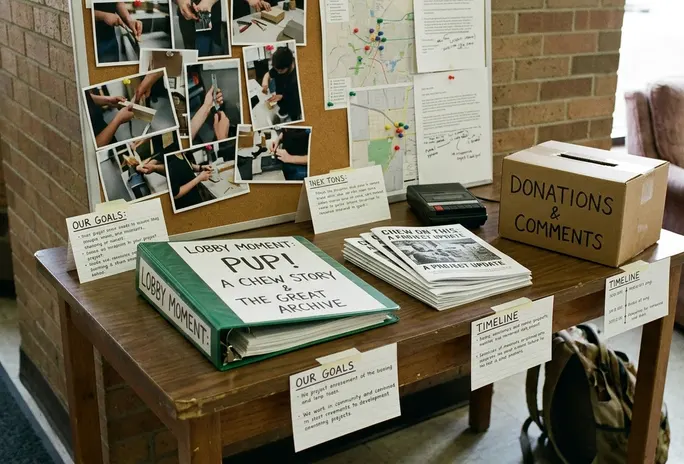
One patron slows, then lowers to the dog’s side instead of leaning over. The handler nods. A hand extends. The dog stays on its assigned mat beside the water bowl, tail easy, body still inside the quiet pocket the staff protected from the exit crush. The handler names what the dog needs at home—pace, patience, a yard or a calm hallway. The patron scans the profile link. The two of them step out of the traffic path so the lobby can keep clearing.
No speech from the stage could finish that exchange. The song opened the door. The mat, the handler, and the unhurried minute on the floor did the rest.