Merging Stagecraft with Rescue Logistics
A hybrid theatrical adoption event operates as a synchronized production where stagecraft and animal rescue logistics run on a single, integrated timeline. The production relies on two interlocked cue tracks. The theatrical track governs music, lighting, entrances, and audience release. The rescue track dictates transport, decompression, presentation, and removal. The rescue coordinator approves all animal-facing cues before stage management incorporates them into the master run of show. A musical cue cannot extend a dog's appearance.
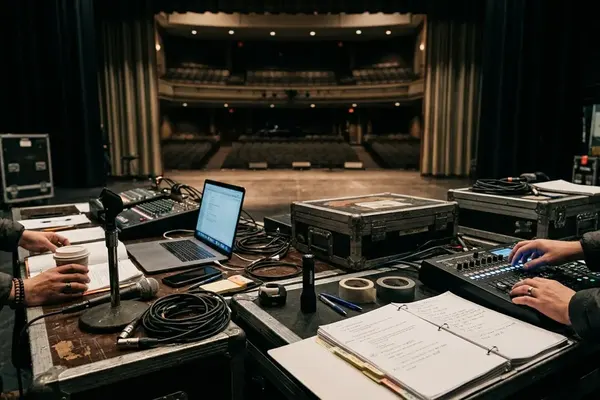
Producers build one master cue sheet to coordinate both tracks. This document features separate columns for performance cues, animal movements, handler assignments, public-contact periods, and contingency exits. Dogs arrive 60 to 90 minutes before their first possible public interaction. This window provides necessary time for toileting, water, a basic condition check, and quiet acclimation away from the auditorium.
Every dog appearance requires a planned non-animal substitute. A portrait projection, a prerecorded rescue profile, or cast narration keeps the story intact when a handler withdraws a dog. Designing the production around both keeps theatrical ambition from overriding animal welfare.
Mapping Acoustic Boundaries and Audience Flow
Production staff prioritize speaker orientation and dog transport when drafting the initial floor plan. They trace the direct sound path from the loudspeakers, mark every public queue, and establish an animal route that completely avoids the stage-door crowd. Early attempts to use a fabric drape as the primary acoustic divide proved insufficient. The drape controlled sightlines effectively but failed to stop low-frequency sound.
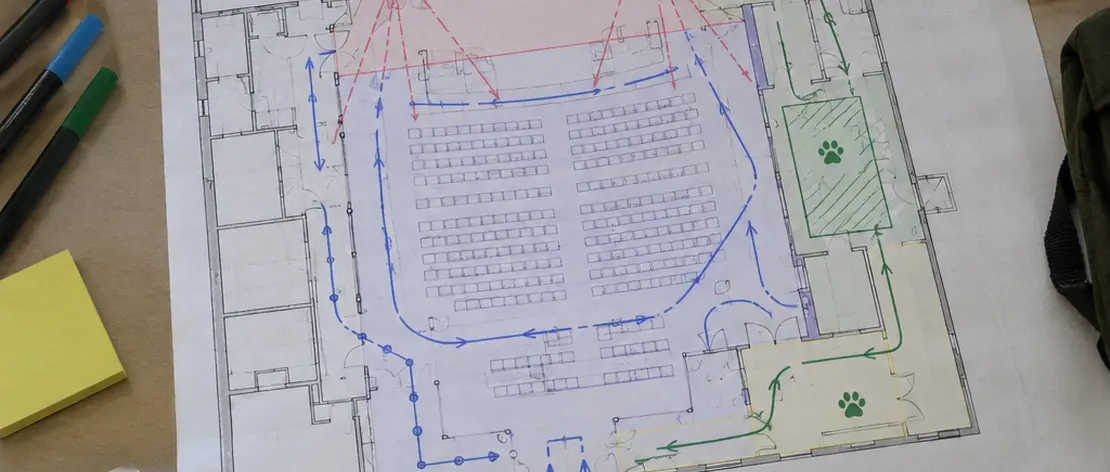
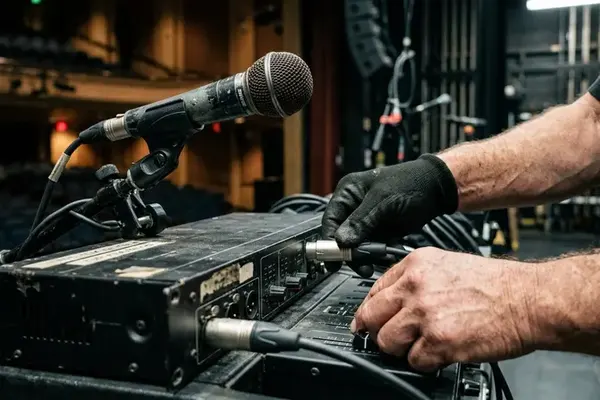
Venue selection hinges on securing a holding room located beyond two closable doors wherever the building permits. This creates a buffer between the dogs and the performance or post-show crowd. The team runs a 30 to 45-minute soundcheck with the auditorium system at show level. During this test, a staff member records conditions inside the holding room, the meet-and-greet area, the connecting corridor, and the animal entrance.
Airflow requires equal attention. The venue engineer must identify the supply and return-air paths before any haze cues receive approval. A shared return-air path triggers the immediate removal of theatrical haze while animals occupy the adjoining zone. Following the performance, front-of-house staff release patrons into the adoption area in timed groups over a 20 to 30-minute period. Sending the entire curtain-call audience through one doorway overwhelms the carefully calmed, acoustically dampened meet-and-greet zone.
Aligning Call Times with Animal Stamina
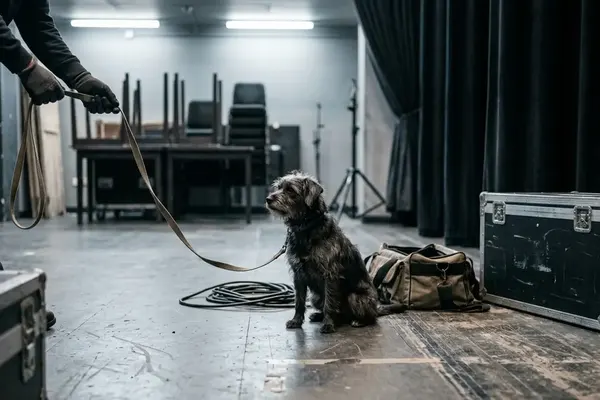
Stage management builds the show around a standard three-hour performer call. The rescue dogs receive entirely separate call times tied directly to their individual presentation windows. Each dog remains under the supervision of one named handler. That handler reports exclusively to the rescue coordinator, operating independently of the stage management team.
While handler authority improves welfare outcomes in most regional venues, the acoustic realities of older theaters require constant monitoring. The handler holds the absolute authority to shorten, relocate, or cancel an appearance without waiting for a production discussion. The cast adapts to these changes in real time.
Contingency Planning Protocol Reserve 10 minutes in the technical rehearsal for the handler, presenter, deck crew, and rescue coordinator to practice the entrance, microphone position, retreat route, and cancellation cue without an animal present.
Producers use a planning placeholder of one 2 to 4-minute presentation per dog. The rescue coordinator can shorten this window or keep the dog entirely offstage. Handlers call a dog 30 to 45 minutes before its planned presentation. They schedule transport away from the venue within 10 to 20 minutes after the dog's final approved interaction.
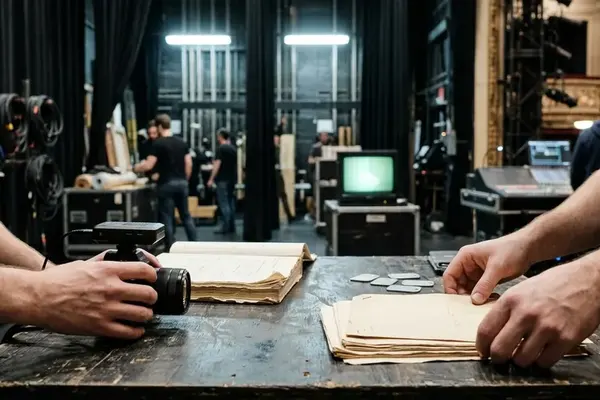
Just as a complex touring production like the Book of Mormon relies on precise backstage traffic management, a hybrid adoption event requires consistent, mission-centered language. The presenter shares the dog's known name, age category, home needs, and application route. Handlers never ask the animal to perform a trick. A dog showing repeated escape attempts, sustained trembling, refusal to take familiar treats, stress panting unrelated to heat, or an inability to settle is immediately represented through narration or media instead of entering the public presentation.
Transitioning from Applause to Application Screening
At curtain call, authority shifts immediately from the show caller to the adoption lead. This transition moves the event's focus from emotional storytelling to application screening. Front-of-house staff hold the audience briefly while rescue staff confirm which dogs remain available for meetings and which need to leave.
Patrons then enter a structured sequence: profile viewing, short conversation with rescue personnel, application submission, and later screening. Applause or donor status does not accelerate this process. The staffed application station opens 5 to 10 minutes after the final bow, only after handlers confirm dog participation.
The station offers a scannable application link alongside a paper alternative containing the exact same questions. Staff attach a source code for the performance date and featured dog to these forms. This allows the team to reconcile inquiries without changing their standard screening criteria. The rescue sends an acknowledgment within 24 to 48 hours that explains the next review step without implying approval or reserving the dog. To evaluate the event, administrators record application disposition, completed meetings, placement date, and any return reported during the first 30 days. Applause, QR scans, and unfinished forms do not count as adoption outcomes.
Conducting the Dual-Mission Venue Walkthrough
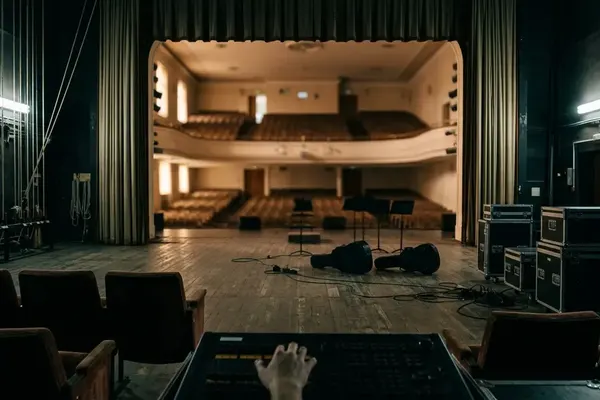
The producer, venue technician, front-of-house lead, and rescue coordinator conduct the venue walk together before committing to a hybrid event. They begin at the proposed animal unloading point, follow the route to the holding room, continue to the presentation location, and test the emergency retreat path. The booking decision rests on comparing this route with audience queues, scenery moves, catering access, and the two-closed-door boundary between the score's lowest-frequency cue and the dog holding room.
The team conducts a 45 to 60-minute full-system audit with the holding-room door closed. They check conditions during dialogue amplification, ensemble music, applause playback, and the lowest-frequency cue in the score. The venue must provide a lockable quiet room featuring washable flooring, drinking-water access, and controllable lighting. This room needs a direct route to an exterior toileting area that does not cross the post-show queue.
Staff mark the animal entrance, holding room, meet-and-greet zone, public queue, emergency exit, and retreat route on the same scaled floor plan used by stage management. They confirm that cases, costumes, warm-up activity, and crew meals will not migrate into the holding-room corridor during the dog's scheduled occupancy.
Draft your master cue sheet today by mapping the exact minute each animal enters the building against your existing technical run of show.