Managing the Preshow Arrival Surge
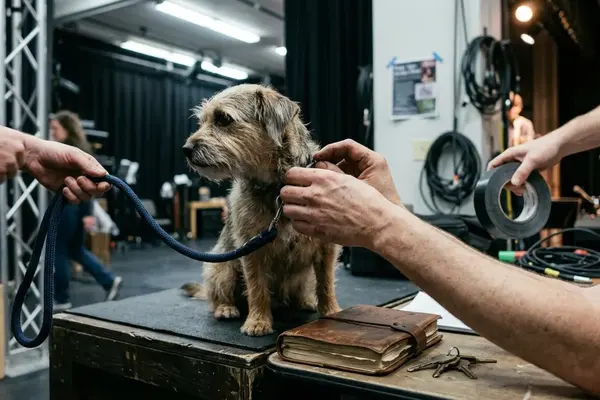
Barnaby enters through the side lobby 25–35 minutes before curtain. Ticket scanning and preshow conversations are already creating a steady hum across the grand foyer. A marquee panel reflects sharply across the polished floor. Each sudden burst of laughter from the gathering arts patrons turns his head. The sensory load of a theatre lobby demands immediate, precise assessment from the handling team.
His tail folds beneath him. His eyes begin tracking the main entrance doors.
The handler stops the planned lobby walk immediately. They shorten the route to the prepared settling mat. Barnaby is moved out of the entrance stream within 30–60 seconds of the tucked-tail response. He is never held in place for introductions during this initial spike in anxiety. Prolonged exposure to a surging crowd compounds stress, making recovery nearly impossible before the performance begins.
The first observation period lasts 3–5 minutes. The handler watches closely for softer eyes, a looser jaw, sniffing, or voluntary weight shifts. Only after these canine stress signals dissipate does the handler permit one quiet visitor to remain nearby. Bright lights and sudden noises trigger startle responses that require instant physical management. A delayed reaction compromises the entire evening for the animal.
Engineering Predictability in High-Energy Venues
The setup is planned backward from the theatre's predictable pressure points. Door openings, ticket-line surges, lobby announcements, and the final rush before seating dictate the spatial arrangement. An open pen invites people to gather on every side, piling on stimulation that overwhelms most rescue dogs. The team chooses a one-direction approach lane and gives the dog a protected rear boundary.
The goal is to control the surroundings completely.
Public greetings are scheduled in short 2–4 minute windows. These brief interactions are followed by 5–10 minutes without new approaches when the lobby becomes louder. Only one prospective adopter enters the greeting edge at a time. Companions remain behind the screen or designated stopping line until the handler invites them forward.
The lobby's baseline noise level shapes the schedule. Foot-traffic patterns show when crowd density peaks, and greetings are slotted into the gaps between those peaks. Working this way lets the dog take the event in manageable segments. The uplifting energy of the crowd is filtered through a structured interface between the arts patrons and the rescue animal.
Assembling the Portable Decompression Kit
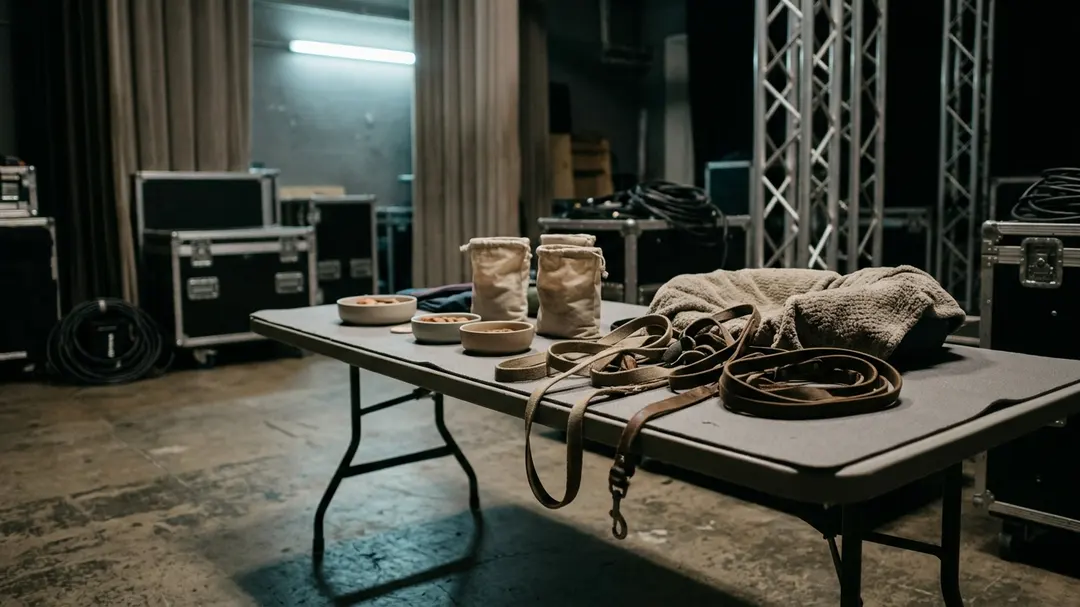
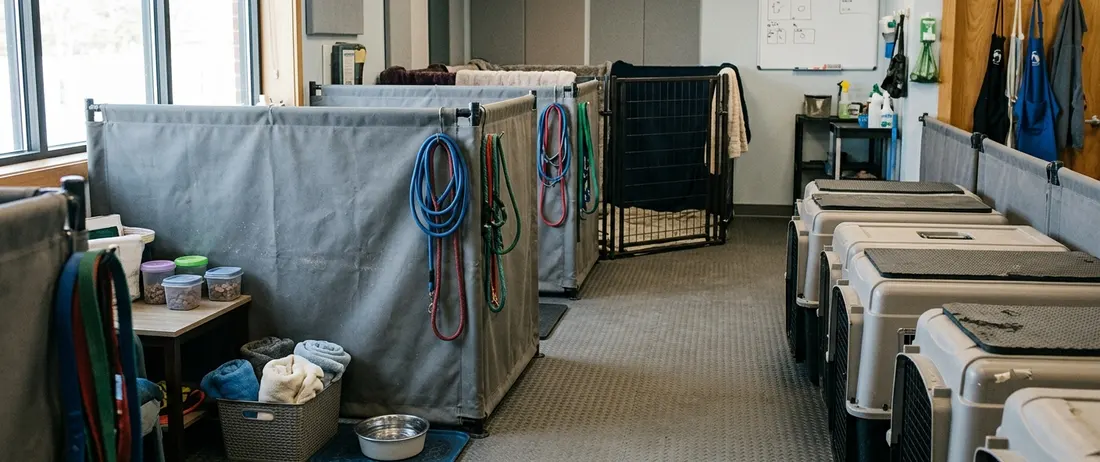
Kit packing follows the order of need during an anxious arrival. Secure the dog, interrupt sightlines, provide a defined resting surface, and then offer enrichment. The leash has two attachment clips for a properly fitted harness and collar. That dual-point connection holds steady in unpredictable spaces. The folding screen can stand without being tied to theatre fixtures. The padded mat has a washable, non-slip underside.
A practical screen consists of two or three lightweight hinged panels. These must be tall enough to interrupt the dog's direct view of legs and opening doors while still allowing the handler to see over or around it. Pack two washable mat covers so a soiled surface can be replaced immediately. Include a water bowl, waste bags, paper towels, enzymatic cleaner, and a laminated card instructing patrons not to reach over the barrier.
Equipment Packing Protocol
A prepared silicone lick mat travels in a sealed container. Use only a dog-safe spread approved for that individual animal, with no xylitol or other unsafe sweeteners. Load the lick mat shortly before use and wash it between dogs. Because heavily stressed animals often refuse food entirely, handlers must prioritize distance and visual blocks over treats in those cases.
A dog that will not sniff, lick, or take familiar food under pressure requires immediate spatial relief. Increase distance and strengthen the visual block instead of repeatedly presenting food. Active coping mechanisms rely on the animal remaining below their panic threshold.
Scouting the Venue for Acoustic and Visual Buffers
During the venue walk-through, the coordinator listens as well as measures. Complete the venue check 45–75 minutes before public entry. Screens, signs, and approach lanes can be placed without moving equipment around the dog. The preferred location is an alcove, unused coat-check edge, or secondary hallway. From there, the dog cannot see the box-office line. Applause or lobby music arrives indirectly.
During a high-energy production like the Book of Mormon, the lobby acoustics amplify every conversation. The screen is angled to form a conversational threshold. Patrons stop outside it, hear the dog's introduction from the volunteer, and advance only when invited.
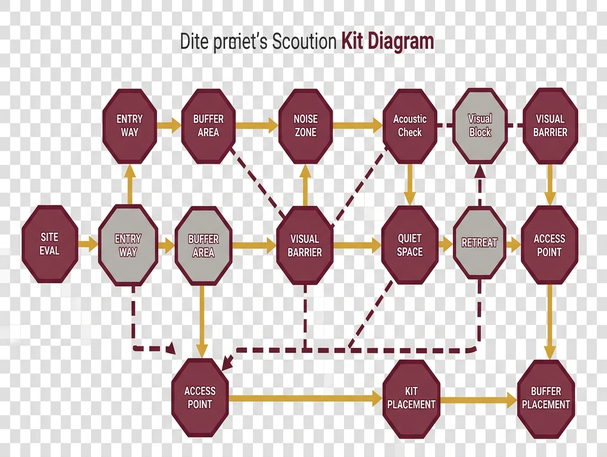
Keep the resting mat against a solid wall. Set the visitor stopping point 6–8 feet from the mat. Adjust the screen angle so the main doors are not visible from the dog's resting position. Preserve the venue's required exit route. Keep cables, sign legs, and treat containers outside the dog's leash arc.
These spatial requirements shape the entire operation. Distance to the nearest speaker array gets measured. So does the reflectivity of the floor surface, since a hard shine throws both light and sound back at the dog. Each factor is weighed to keep sensory intrusion low.
Constructing a 10-by-10 Side-Exit Station
For a 10-by-10-foot station near a side exit, the team marks the public edge first, then builds inward. Allow 12–18 minutes for setup. Spend 3–4 minutes to inspect the floor and exit path. Take 4–6 minutes to place the mat and screen. Use 5–8 minutes to check leash attachments, water, treats, signage, and volunteer positions.
Place the mat with its long edge against the solid wall. Leave enough open floor for the dog to stand, turn, and move behind the handler without contacting the screen. The folding screen is turned diagonally to block the main entrance rather than enclosing the dog. Prepare the lick mat before Barnaby enters. Secure one leash clip to the harness and the other to the collar. Perform a gentle attachment check before opening the station.
The handler sits or stands between Barnaby and the opening. A second volunteer handles questions at the screen edge. If Barnaby resumes rapid scanning, leans away, freezes, or repeatedly attempts to leave, the greeting pauses. The public-facing volunteer closes the approach lane for a 5–10 minute reset. Say the lobby doors bang open mid-greeting and Barnaby freezes: the volunteer steps into the lane, the visitor is thanked and moved on, the screen is nudged another few degrees toward the doors, and Barnaby settles onto the mat with the lick mat. The lane reopens only when his jaw loosens and he sniffs the floor on his own.