When the House Lights Come Up and Your Apartment Still Has a No-Pets Clause
You are standing in a crowded Los Angeles theatre lobby minutes after the curtain call for Pup! A Chew Story, clutching a folded playbill while a shepherd mix in an "Adopt Me" vest greets patrons beneath the marquee lights. The applause is still ringing in your ears. You feel an immediate, visceral urge to sign an adoption contract on the spot, right until that theatrical high collides with the reality of your housing status and calendar: a strict no-pets lease clause, an upcoming 12-hour production call on a touring show, or a resident cat that refuses to share territory.
At The Great Homecoming events, same-night adoption signatures represent only a fraction of the work needed. If an audience member experiences an emotional surge during the finale and leaves empty-handed because they cannot house a dog permanently, that enthusiasm can dissipate unless we offer other ways to help.
Our stage managers and event coordinators design the post-show lobby flow around a concept we call the playbill-to-placement handoff: turning the lobby's emotional spark into a foster enquiry, a repeatable care shift, an exact wishlist delivery, or a verified dog-profile introduction. Rather than funneling every patron toward a single crowded clipboard, we establish separate routes for adoption enquiries, foster applications, volunteer onboarding, and requested supply deliveries.
In our event follow-up records, we distinguish between an initial lobby enquiry and a completed action. A conversational check-in next to the merchandise booth is just an intention. A completed action is an orientation booking on the calendar, an approved foster placement, a delivered supply request matching our inventory needs, or an adoption application directly attributed to a shared digital profile. To make that transition easier, our post-show communications always keep the partner rescue contact and the individual dog's live profile link together in a single message, ensuring a patron never has to reconstruct a dog's identity or availability from a blurry smartphone photograph of a printed playbill.
Weighing Your Commitments: Fostering, Volunteering, Supply Drives, and Digital Amplification
Choosing how to help after the show requires an honest look at four commitments: permission and space at home, time in your recurring schedule, financial outlay, and emotional bandwidth. Before committing to a sign-up sheet in the lobby, we ask patrons to evaluate what they can sustain after the stage lights power down.
Start with the physical threshold: do you have legal landlord permission and spatial capacity to house an animal temporarily? If yes, short-term fostering is an option. Fostering demands dedicated space inside the home alongside a clear, pre-arranged agreement with the rescue regarding who supplies food, containment equipment, veterinary care, and transport to appointments. Emotionally, it requires the resilience to manage initial household adjustment and the eventual handover to a permanent adopter.
If your lease or domestic routine prohibits bringing a dog home, the remaining options are physical labor, supply deliveries, or sharing adoption information:
- Hands-On Volunteering: Requires travel time and strict scheduled attendance, though no housing space. The emotional labor centers on routine custodial care and procedural consistency rather than domestic attachment. Before committing, prospective volunteers must inquire about mandatory orientation prerequisites and recurring-shift expectations.
- Targeted Supply Drives: Shifts the investment from calendar hours to financial outlay. Rather than running an open-ended neighborhood collection that burdens staff with sorting tasks, you budget around a single requested item and a confirmed delivery window.
- Digital Amplification: Requires no housing space or financial outlay. The task is informational: verifying a single active listing, writing a tailored introduction for a specific group or contact, and directing resulting enquiries to the rescue.
Municipal animal shelters and private foster-based rescues across Southern California enforce their own eligibility, training, housing, and placement rules; a warm theatre lobby introduction never constitutes formal approval to handle or take home a dog.
Short-Term and Weekend Fostering: Giving a Dog a Break from the Kennel
Short-term fostering gives a dog time to decompress and provides observations about their behavior. Kennels—and even well-managed theatre lobbies—expose dogs to echoing noise and dense human foot traffic. Moving a dog into a quiet living room gives them a break and reveals how they navigate ordinary household sounds and activities.
When we coordinate with rescue partners ahead of a theatrical showcase, we advise prospective fosters to submit their formal foster application before the performance date. Once approved in the system, you can speak with the rescue coordinator about placement lengths—asking, for example, whether the organization offers 48-hour weekend decompression stays or 14-day bridging placements while permanent adoption applications are vetted after a show. These timeframes serve as useful scheduling models to discuss with the coordinator, though exact durations always depend on the rescue's arrangements and the individual animal's needs.
Before taking custody of a dog, establish a clear handover plan. Confirm the exact pickup and return schedule, log the 24-hour emergency contact number, and verify who provides the walking equipment, daily rations, and any medication directions supplied by the rescue. Inside your apartment or house, prepare a dedicated resting corner positioned well away from stereo speakers, rehearsal keyboards, and heavy hallway foot traffic.
Book of Mormon Pacing Notes
Treat a weekend stay like a quiet technical rehearsal rather than an audition. Just as a stage manager tracks cues in a complex production like Book of Mormon without interfering with the actors, your role during a short-term foster is to observe ordinary household encounters without deliberately provoking or testing the dog's reactions.
The behavioral notes you return to the adoption coordinator are priceless when they separate raw observation from subjective interpretation. This is where we enforce the marquee-to-living-room boundary: a calm greeting after the finale is an observation from a managed theatre lobby, indicating nothing about stair confidence, television tolerance, or comfort alone in an apartment. Instead of submitting vague labels like "shy but friendly," record what happened before the behavior, what the dog did, and the context with the date attached. Writing "Doorbell sounded; dog moved behind the armchair and approached the visitor three minutes later with a loose body posture" gives placement coordinators useful detail. Apply that same detailed logging to how the dog navigates open staircases, settles during television audio playback, signals for toileting, and approaches their feeding bowl.
Backstage and Kennel Shift Volunteering: Trading Hours for Tail Wags
For patrons whose leases forbid animals, trading calendar hours for hands-on work helps dogs move toward placement. However, we must separate the theatrical event role from the municipal or private kennel role before anyone signs a roster, as the physical tasks and crowd dynamics differ sharply.
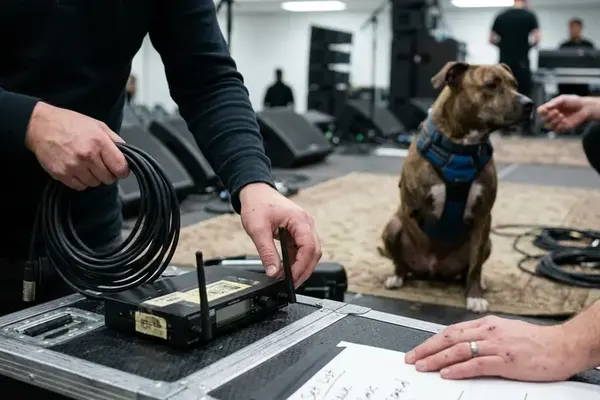
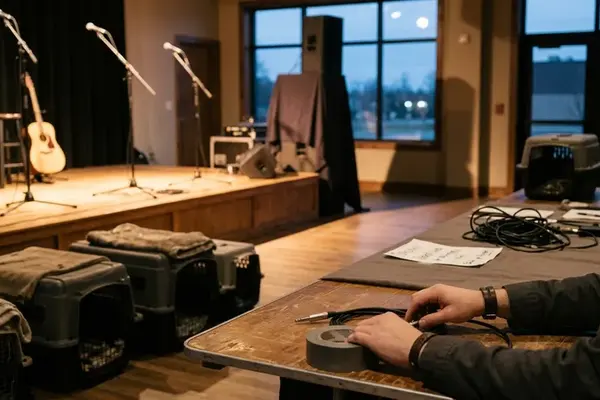
At a high-energy lobby event like The Great Homecoming, new volunteers should start with perimeter logistics rather than animal handling. We structure lobby assignments to keep audience queue management, rescue-table enquiries, and trained leash handling strictly separated so theatregoers never receive conflicting safety directions. A first-time event volunteer provides immense value by directing pedestrian flow away from fire exits and keeping backstage dog-rest areas clear of curious crowds, leaving direct leash control to assigned, certified personnel.
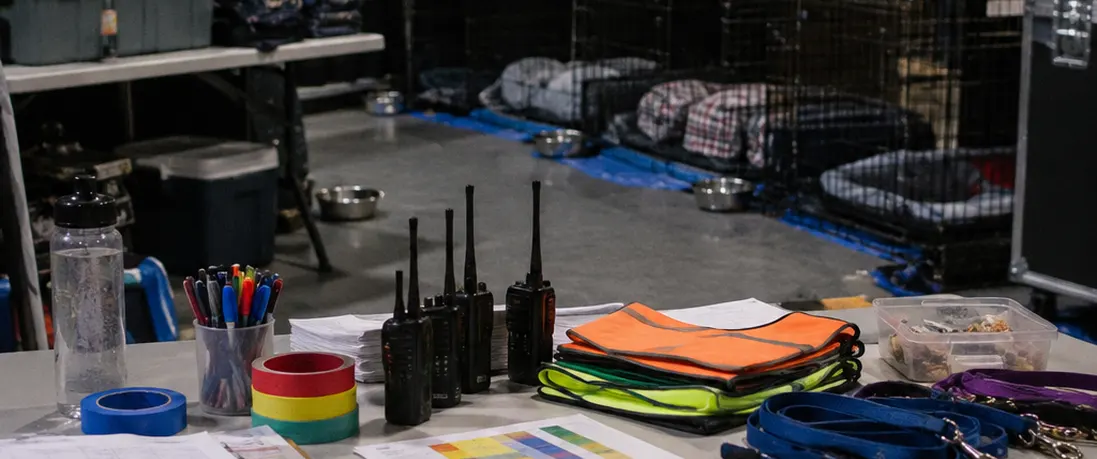
In contrast, a morning shift at a local shelter strips away the theatrical spotlight in favor of quiet, repetitive custodial work. After completing basic onboarding—such as enrolling through the LA Animal Services volunteer and foster programs or a partner rescue's portal—we recommend selecting one repeatable task that matches your physical comfort level. If you take on a laundry assignment, ask the supervisor exactly where clean bedding is stored and how soiled or contagious items are separated to prevent cross-contamination. If you select enrichment preparation, ask for the shelter's approved food materials and the sanitation routine for stuffing and freezing durable puzzle feeders.
From an operations standpoint, burnout prevention is fundamentally a scheduling decision. Shelters expend significant staff capacity training new recruits, meaning a volunteer who works one exhausting weekend marathon and disappears represents a net logistical loss. When making your initial contact with a volunteer coordinator, ask for the next mandatory orientation date, clarify the exact physical lifting or standing requirements of the role, and propose a sustainable recurring cadence—such as discussing whether a reliable two-hour monthly slot fits their roster needs.
Curating High-Utility Supply Drops Instead of Random Toy Bins
Well-intentioned generosity frequently creates a secondary sorting bottleneck after the curtain falls. When patrons clean out their closets and drop off random assortments of pet items in the theatre lobby, stagehands and rescue liaisons have to spend post-show strike hours separating usable gear from disposal hazards. For example, opened bags of dry kibble and easily shredded plush toys regularly create acceptance and kennel-supervision problems, forcing rescues to divert labor toward waste management.
To make material donations usable right away, we treat supply drives as a structured backstage packing check. Ahead of a show weekend, our production liaison contacts the partner rescue to confirm their exact spatial and inventory specifications: requested crate dimensions, collar size ranges, dietary formulations, and confirmed drop-off logistics. Audience donations can then fill those verified parameters directly.
Drawing on pre-show inventory reconciliations from our production checklists, alignment with explicit technical specifications determines whether a donated item enters active circulation or sits in storage. Before purchasing or packing supplies into your car trunk for a performance, run through this verification protocol:
- Containment Hardware: For a requested transport crate, confirm the exact height, width, and length dimensions required for the rescue's transport vehicles, verify that all door latches are intact, and check whether the unit requires tool assembly prior to delivery.
- Walking Equipment: When donating martingale collars, obtain the specific neck-size range currently needed by the intake team. For heavy-duty slip leads, confirm the requested rope gauge and ring construction rather than buying solely by aesthetic appearance.
- Nutrition and Sanitation: All unopened wet or dry food donations must retain an intact factory seal, complete ingredient label, and legible best-before date. Enzymatic cleaners must match the exact chemical product specification listed on the rescue's active wishlist to remain compatible with their kennel sanitation protocols.
- Bedding and Enrichment: If assembling a flat-towel bundle for kennel lining, pack only clean, dry cotton towels free of loose woven loops or frayed edges that could cause gastrointestinal obstruction if ingested. Always verify the rescue's current approved item list before adding durable rubber chews to the bundle.
Casting the Right Match: Why One Thoughtful Bio Share Beats Fifty Generic Reposts
The final non-adoption pathway requires no physical lifting, no landlord negotiations, and no budget, yet it can fall short due to poor execution. Mass-reposting on the order of fifty generic kennel graphics across social feeds can miss potential applicants because it relies on algorithmic luck rather than targeted social routing. Effective digital amplification functions like theatrical casting: you are matching a documented set of behavioral attributes to a specific domestic role within your personal network.
Start with the partner rescue's live digital listing rather than the emotional impression left by a thirty-second greeting under the lobby chandeliers. Read the clinical and behavioral documentation to identify one verified quality that connects the dog to a real household routine you know firsthand. If you have a colleague who runs trails in Griffith Park every morning, check the profile for established endurance and activity needs rather than inferring hiking suitability simply because the dog is a shepherd mix. Rigorous amplification requires separating your personal lobby observation from vetted rescue data: noting "I saw him settle quietly beside his handler during intermission" is a valid observation of public composure, whereas claiming he has zero separation anxiety when left alone in an apartment is an unverified extrapolation.

Never rely on a photograph or screenshot of the printed theatre programme when sharing a dog's story online. Static screenshots continue to circulate long after a dog's status changes, generating dead-end enquiries for overwhelmed coordinators. Always include the direct hyperlink to the rescue's live profile, check that listing immediately before posting to confirm availability, and update or archive your post the moment the rescue reports a completed placement.
If you want to help after leaving the theatre, skip the generic social media blast and take one targeted action: select a single overlooked senior or large-breed dog from the event programme and post a three-sentence personal endorsement to your local neighborhood group or workplace channel. Construct those three sentences with precision—identify the specific dog and the managing rescue in sentence one, relay one verified lifestyle detail from their official profile in sentence two, and provide the direct link to the live application page in sentence three. Commit to that single, disciplined introduction tonight, and you give someone moved by the dog's story a direct route to apply.