Mapping the Animal Call Sheet Against the Production Schedule
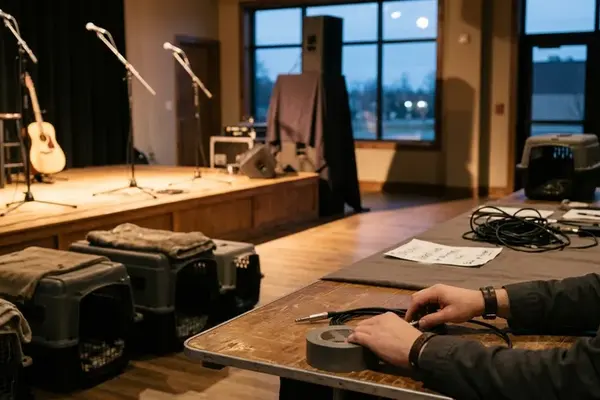
A musical production operates on a foundation of strict cues, precise timing, and orchestrated movements. Integrating live rescue animals into this highly controlled environment requires a parallel system of rigorous planning and execution. The reporting plan begins with a detailed analysis of the animal call sheet. Identify the exact moment each dog enters the building. Track who maintains custody at every handoff throughout the evening. Locate the designated water stations and relief break areas. Pinpoint the specific individual holding final stop authority over the animal's participation.
Compare this sequence with the technical schedule, including sound checks, audience seating, and lobby adoption activity. Arrive 60–90 minutes before the public call. This early arrival allows observation of the load-in process, animal acclimation, handler briefings, and the initial response to an empty auditorium. The tension between entertainment value and rescue protocols surfaces during these preliminary stages. A theatrical cue demands absolute precision. Animal welfare requires constant flexibility and observation.
The most compelling journalism focuses on this intersection, examining how stagecraft directly dictates animal welfare. Backstage, the production runs as a logistics operation, with every movement calculated to keep the canine performers safe and comfortable. The animal call sheet provides the blueprint. It reveals the hidden structure supporting the public spectacle.
Tracing the Canine Route Through the Venue
The physical theatre space presents immediate obstacles for canine performers. Walk the complete canine route from vehicle arrival to the holding area. Continue the path to the stage or lobby position, the outdoor relief point, and the final exit. Record flooring changes, stairs, automatic doors, and cable runs. Note the presence of food props, orchestra access points, and areas where audience members approach the animals.
Map the event through three distinct working perspectives. The stage manager controls the flow of the production. A handler reads the dog's real-time behavior. Custody and adoption applications belong to the rescue coordinator. A hallway judged passable by production staff often narrows dangerously near a speaker stack or loading door. Reserve 12–18 minutes with the stage manager before house opening. Secure 8–12 minutes with each handler after the dog's final scheduled appearance. Interviewing handlers during active custody divides their attention and compromises safety.
Assessing Acoustic Hazards
While acoustic modeling can predict sound pressure levels in the orchestra pit, live animal responses remain highly variable. The physical environment must be continuously assessed and modified.
Rescue logistics and theatrical schedules meet only through constant communication. The stage manager and the handler must work in tandem, navigating the physical constraints of the venue while prioritizing the well-being of the animals. The true story lies in these backstage negotiations.
Capturing Authentic Interactions Under Stage Lights
Theatrical lighting creates a challenging environment for ethical pet photography. Set the visual plan during rehearsal or an empty-house walk-through. Mark two or three positions that provide clean sightlines without blocking handlers. Ask the crew which cues include sudden movement, applause, haze, or sharp lighting changes.
Disable the flash, focus-assist lamp, shutter sounds, and any front-facing tally light before entering an animal area. In dim scenes, begin near 1/250 second for ordinary movement. Raise the camera's sensitivity to capture the moment. Silent electronic shutters can produce banding beneath some LED stage fixtures. Test them during a lighting cue. Switch to the quietest permitted mechanical setting if bands appear.
Confirm photo positions 30–45 minutes before doors open. Limit close-range coverage to short passes of 2–4 minutes. The camera must never become a persistent object in the dog's space. Photograph interactions as they unfold. Let the dog leave the frame naturally. A handler creating distance reveals more about the animal's comfort than a posed portrait.
Candid moments carry the story: they show the bond between handler and dog, and the care given to the animals in a high-stress environment. Ethical photography respects the boundaries handlers set and puts the welfare of the subject ahead of a dramatic image.
Defining Welfare Standards for the Stage
Accurate terminology builds credibility with rescue partners and aligns with ethical journalism standards. Ask each organization to define its terms before using them in copy. Separate a behavioral assessment from a guarantee about future behavior. Treat decompression as a managed reduction in stimulation. It operates as a biological process.
Formulate interview questions that reveal the depth of the partnership between the theatre company and the rescue organization. Ask whether screening included comfort around unfamiliar adults. Inquire about recovery after applause or dropped objects. Check for leash handling in narrow passages, tolerance of costumes, and the ability to disengage and settle away from the public. Drawing on a review of Book of Mormon production records, the integration of live animals requires specific sensory vetting.
Schedule the terminology interview 3–7 days before publication. Leave 24–48 hours for the rescue organization to verify spellings, custody status, and the precise meaning of specialized welfare language. This verification process ensures accuracy without granting the organization control over the article.
Selecting dogs suited to the sensory environment of a musical production is rigorous work. A behavioral assessment weighs each dog's capacity to handle the particular stressors of the theatre, and the partnership between company and rescue organization holds together only through clear communication and shared welfare goals.
Tracking the Post-Performance Placement Chain
The curtain call represents a beginning. Track outcomes as a chain. Record inquiries, submitted applications, approved placements, foster transfers, and finalized adoptions as distinct statuses. Document the sequence actually used after the performance. This includes application review, household and landlord checks, introductions with resident animals, veterinary-record discussion, agreement signing, fee processing, and transfer scheduling.
Confirm each status with the organization holding the dog's record. Ask what happened to dogs that received attention but remained unadopted. Make an initial status check 24–48 hours after the event. Conduct a second check 7–14 days later. Request one further confirmation 30–45 days after placement if publication continues beyond the event cycle. Distinguish a trial placement from a finalized adoption.
Verifying Post-Show Custody
Rigorous vetting improves the odds that a permanent placement holds. Foster networks provide essential support for dogs requiring additional time before finding a permanent home.
An oversimplified narrative of immediate adoption ignores the complex reality of animal rescue. Post-show procedures exist to make sure each dog lands somewhere suitable, and the rescue organization's commitment extends far beyond the final bow. Measure the real impact of the theatrical event in the long-term success of these placements.
Observing the Backstage Sensory Transition
The welfare story changes at the threshold where public celebration ends. Handler authority takes precedence. The dog retreats without being photographed or introduced. Report the final scene from the dog's exit path. Follow at an agreed distance as the handler moves from stage or lobby light into the designated quiet area.
Observe the immediate changes. Voices lower. Public access ends. Visual barriers appear. Water is offered. Interaction becomes optional. Inspect the decompression area. Look for a closable or screened entrance, non-slip footing, water, and absorbent cleanup supplies. Verify an unobstructed exit and separation from prop traffic, dressing-room visitors, speakers, and lobby queues.
A handler lengthens or ends the quiet interval according to the dog's behavior, then conducts a final welfare check and completes the custody handoff. The real success of the night happens in these quiet, controlled spaces. The production schedule mandates that handlers protect a quiet interval of 15–30 minutes after the dog's final public appearance before allowing any further adopter greetings.