What Audiences and Adoptable Dogs Lose When the Music Is Pre-Recorded
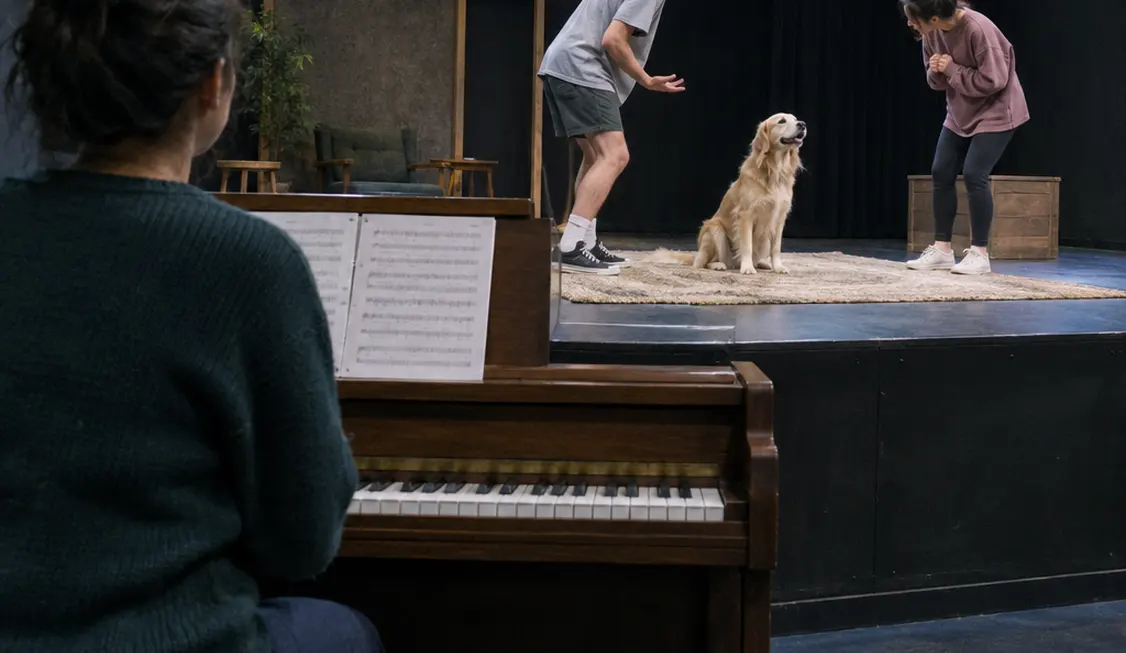
Every comedic production faces a foundational cue decision: does the next musical entrance follow an elapsed playback time, or does it wait for an actor who is still letting audience laughter settle? In an animal-centered show like Pup! A Chew Story, that technical choice defines the entire texture of the room. Imagine a performer playing a restless hound caught in the middle of a physical chew-toy gag. If the crowd roars for three extra seconds, a fixed backing file continues rolling unless a sound operator actively intervenes to pause and re-cue the deck.
The stakes here are lost comic space and interrupted attention. When a premature musical entrance barges into a laugh, it covers the actor's next line and severs the audience's connection with the character on stage. The performer is trapped in a split-second dilemma: hold the physical joke and miss the vocal downbeat, or abandon the comedy to catch the song.
Consider a possible staging situation during a curtain call where an actual rescue dog lets out an unexpected bark. Three competing actions unfold at once: the performer pauses to acknowledge the dog, the handler steps in to check the animal's comfort, and a live musician simply waits for a visible restart cue. A click track serves as a steady timing reference for performers, though a rigid playback file locks the room into a predetermined grid. In an intimate Los Angeles black-box venue, replacing a human player with an unyielding audio track builds a mechanical barrier right where the production needs warmth and spontaneity to keep the focus on the cast and creative team and the animals they champion.
Breathing with the Pack: How Musicians and Actors Time Comedy Together
Building reliable comedy in the musical requires a clear, repeatable architecture between the stage and the accompaniment. Rather than leaving timing to chance, the actor and music director walk through a deliberate rehearsal sequence to lock in the mechanics of a gag.
- Mark the physical bit: The performer and music director identify the exact beat where the chew-toy business begins and where the spoken or sung text resumes.
- Select the musical holding pattern: They choose between two distinct tools to give the physical joke room. A vamp repeats a designated measure or two-bar passage until a cue releases it, keeping rhythmic momentum alive under kinetic movement. A fermata, by contrast, prolongs a single marked note or rest, suspending time while an actor milks a quiet look or freezes in embarrassment.
- Establish an unmistakable release cue: Because hearing the joke alone does not reveal whether the performer is physically ready to sing, the pianist-conductor must be positioned where the actor's face or an agreed hand signal is clearly visible.
- Stress-test the transition: In a well-planned rehearsal, the team might reserve 15 to 20 minutes to run that single chew-toy sequence under three different conditions: an immediate audience chuckle, a rolling wave of delayed laughter, and a deliberately missed visual cue.
The value of this preparation becomes clear when comparing how a signature comedic transition lands across different accompaniment formats. At the exact moment the hound finally drops the squeaky toy and prepares to sing the next verse, a live pianist remains inside the vamp until the actor takes a visible preparatory breath, ensuring the vocal entrance lands cleanly on top of a settling room. Under an uninterrupted fixed audio file, the accompaniment marches into the verse on the recording's schedule, forcing the actor to rush the physical payoff or swallow the opening syllables of the lyric.
A music director watching the stage adjusts tempo and dynamics in real time, responding to how a lively Saturday matinee crowd differs from a quiet Tuesday evening house. That human elasticity turns a rehearsed routine into a living conversation.
Setting the Emotional Temperature for The Great Homecoming
Comedy opens the door, yet the core mission of Pup! A Chew Story and The Great Homecoming events is moving an audience from laughter to genuine compassion for shelter pets. That emotional pivot happens most visibly during the handoff from a tender ballad about shelter life into a spoken pet adoption appeal. When managed by a live player, this transition unfolds as a gradual, responsive decrescendo.
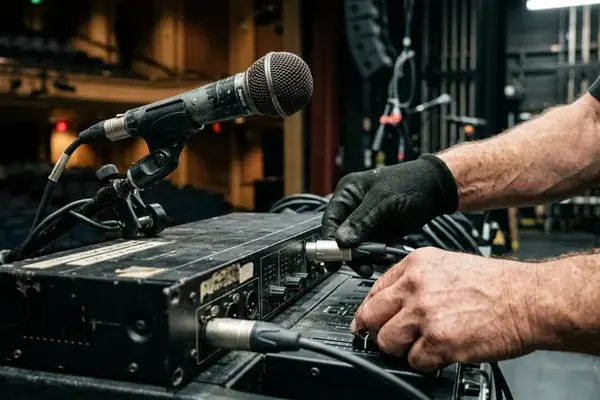
Tenderness in a small theater comes from deliberate audible choices: playing fewer notes, dropping into a quieter dynamic register, and leaving generous space around the singer's breath. Both acoustic instruments and loudspeakers generate physical sound vibrations in a room, and harshness or heavy compression are not inevitable features of recorded playback if a system is mixed with care. The true advantage of a live keyboardist or small combo during this sequence is pacing.
Homecoming Handoff Protocol: Advocating live accompaniment for Pup! A Chew Story never means scoring every canine entrance. When a shelter dog steps onto the stage, the animal handler's request for silence takes immediate precedence over any musical finish.
As the ballad concludes and the host steps forward to speak about pet adoption, the music director thins the harmonic texture so every spoken word remains intelligible. Before the handler brings an adoptable dog out to meet the crowd, the underscore ends completely. Proposing a quiet entrance with no musical accent on the dog's arrival protects sensitive animals from startling transients.
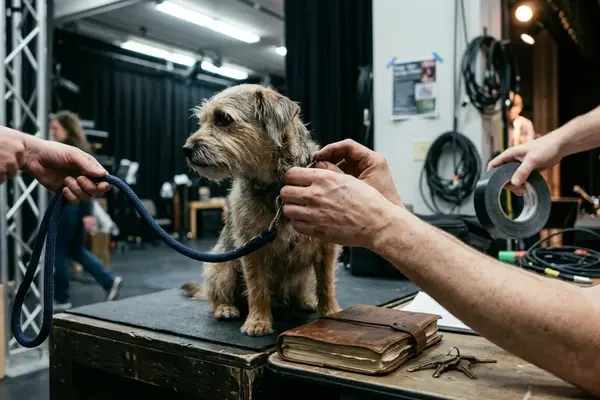
Canine comfort on stage depends on four practical variables: overall volume level, the absence of sudden percussive attacks, the animal's physical proximity to the sound source, and a clear, unobstructed route to a quieter backstage area. Furthermore, the handler holds an agreed visual signal that commands immediate musical silence at any point during the segment. Letting the animal's actual behavior dictate the pace—rather than requiring a handler to rush an introduction before a pre-recorded track runs out—keeps the room calm and leaves the audience's undivided attention on the dog.
Weighing the Pit Against the Purse: Space, Staffing, and Budget Realities
Putting live players into an intimate Los Angeles theater requires a clear-eyed look at floor space, sightlines, and production budgets. Because no specific orchestration or band size is confirmed for upcoming mountings of the musical, producers and supporters should treat a solo pianist-conductor or an acoustic duo as practical options to investigate, where feasibility depends on score permissions, venue layout, and the applicable labor agreement.
When pricing a mounting, a responsible production team follows a strict budgeting order: protect animal handling, safe backstage circulation, and adoption logistics first; only then price the smallest musically credible live arrangement.
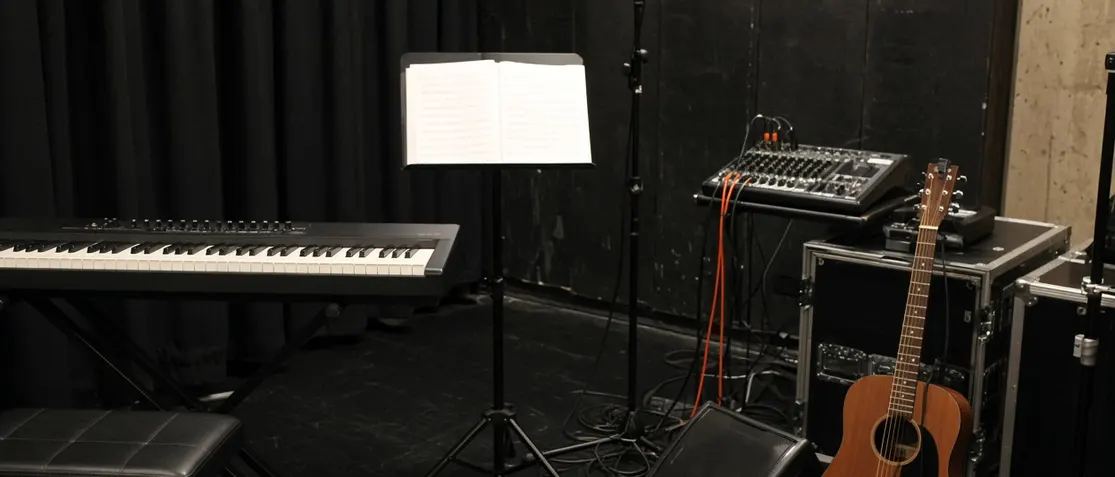
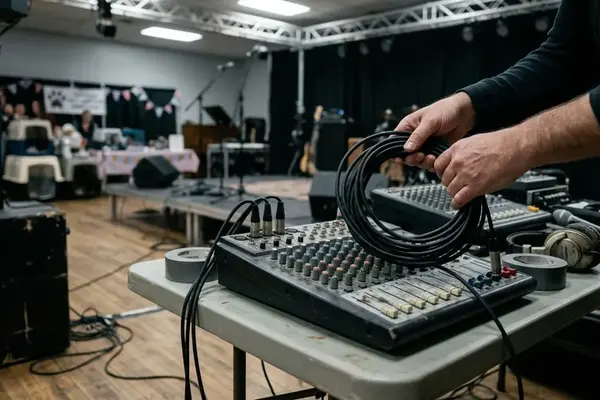
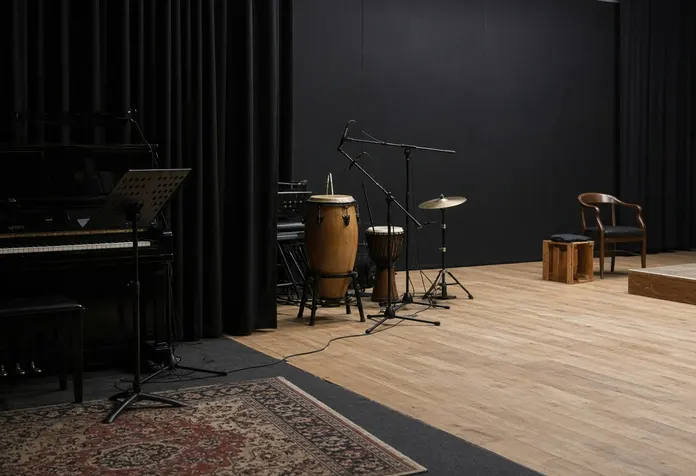
Counting instruments alone always understates the physical footprint in a compact black-box space. A single keyboard setup requires floor area for the instrument, an adjustable bench, sustain and volume pedals, an illuminated music stand, power access, and safely taped cable runs that neither actors nor rescue dogs will trip over. Adding a drum kit or percussion rig introduces cymbal stands, throne clearance, and acoustic shielding. Tucking an acoustic duo into the wings might save front-row seating, though it introduces a new operational hazard: if a cheap corner location obscures the players' view of the stage or conductor, it undermines the very responsiveness the budget is paying to achieve.
On the financial ledger, evaluating a solo pianist-conductor against a two-piece combo means looking far beyond the nightly performance fee. Producers must build separate budget lines for:
- Score reduction and arranging: Paying an orchestrator or music director to adapt full ensemble arrangements so they sound complete on one or two instruments.
- Music preparation: Formatting, printing, and binding clean, page-turn-friendly parts marked with clear vamp brackets and dialogue cues.
- Rehearsal calls: Compensating musicians for music rehearsals, Sitzprobe, and full technical runs with the cast and creative team, whether under an applicable union contract or a negotiated freelance structure.
- Instrument maintenance and rentals: Covering delivery, tuning for acoustic pianos, or dependable amplification for digital keyboards.
- Substitute coverage: Funding rehearsal hours and book preparation for a qualified sub so an illness does not halt the run.
Practical Questions for Patrons and Supporters to Ask Before Buying Tickets
Theatregoers, arts donors, and pet adoption advocates hold real leverage when checking production announcements or browsing ticket listings for upcoming runs. Rather than making broad demands for a full Broadway pit, supporters can follow a concrete inquiry sequence that helps producers build live music into the show safely and sustainably.
Step 1: Clarify the Accompaniment Format at the Box Office
Start by establishing which musical elements will be performed live and how the production handles spontaneous stage moments. When contacting the box office or production team, ask directly: "Will the accompaniment use live musicians, recorded tracks, or a combination, and who controls pauses during audience laughter?" Follow up by asking whether local Los Angeles musicians are being engaged for the run, and whether their paid schedule includes dedicated rehearsal time with the actors to lock in comedic timing.
Step 2: Verify Acoustic Safety for Canine Guests
For patrons whose primary passion is animal welfare, the central issue is how sound design interacts with shelter pets during The Great Homecoming segments. Pose a two-part operational question to the organizers: "Who can stop the music during canine introductions, and where can a handler take a dog away from the performance sound?" Ensuring that handlers have direct authority to halt accompaniment reinforces a humane, dog-first backstage culture.
Step 3: Request a Costed Sponsorship Proposal
Donors and community sponsors can bridge the gap between a pre-recorded track and a live player by underwriting a fully defined musical engagement rather than offering a vague contribution toward production values. When speaking with development staff, ask: "Can you provide a written amount covering a keyboardist's rehearsal and performance calls, along with music preparation and equipment costs?" Finally, protect your philanthropic intent by asking what happens if the funded musician becomes unavailable—specifically whether the proposal includes a budgeted substitute, a revised live performance plan, or another explicitly agreed use of the contribution.
When the next staging of Pup! A Chew Story announces its run, will you merely ask for a seat in the house, or will you ask how you can help put a live musician in the corner?