From Shelter Kennels to the Stage: Navigating the Original 2022 Production Archive
Reconstructing a live comedic musical from scattered rehearsal notes, lyric sheets, and event folders requires a way to organize the material before anyone opens a box of script pages. When patrons or revival directors approach the vault for Pup! A Chew Story, they encounter a production whose original 2022 Los Angeles staging operated alongside The Great Homecoming pet adoption initiative. Piecing together how a show balances theatrical slapstick with lobby outreach demands more than casual reading. Our production archiving team compiled this companion guide to orient newcomers, giving researchers and staging teams a reproducible method to organize the vault before they examine the score or plan a revival.
Archival work starts with a strict evidence ledger. Treat the 2022 Los Angeles staging as the initial search lead, then locate a dated playbill or event listing that connects the stage performance to the accompanying adoption events. Because theatrical artefacts accumulate across months of development, an archivist records performance dates separately from rehearsal schedules, audio sessions, and script-revision stamps. Every entry in the ledger requires four distinct fields:
- Document title: The exact header on the script draft, call sheet, or lobby flyer.
- Production or revision date: The calendar mark distinguishing a workshop table read from an opening-night text.
- Page or recording locator: The pagination or elapsed audio timestamp where the item appears.
- Supported claim: The specific historical or dramaturgical point verified by that artefact.
With the ledger established, the guide moves through premise, character profiles, musical architecture, welfare advocacy, and a full scene audit. This sequence introduces newcomers to the canine perspective first. To read the libretto accurately, track three sensory layers across every scene: what a dog hears inside the kennel, what the dog believes that sound signifies, and what the audience infers from the visible human action. While contemporary satirical scores like Book of Mormon often anchor their comedy in human ideological clashes, Pup! A Chew Story builds its theatrical engine entirely from sensory translation—turning the rattle of a metal latch or a Squeaker cue into high-stakes canine drama. Note that the initial outline serves as a research brief rather than a verified production history; specific premiere details, workshop choices, and measure-level stage business require confirmation against primary vault documents before a team treats them as settled production facts.
Decoding the Pack: Principal Canine Characters and Vocal Archetypes
Assigning vocal categories in an ensemble comedy about shelter dogs frequently tempts directors to cast by breed stereotype. A rigorous dramaturgical breakdown avoids visual assumptions and builds character profiles by aligning spoken dialogue cues, sung entrances, and stage movement instructions directly from the libretto.
Within the kennel ensemble, three principal figures establish the show's dramatic geometry: the eager-to-please newcomer, the streetwise veteran hound, and the neurotic toy-breed narrator. Rather than starting with vocal range, the character ledger establishes each dog's dramatic function within the pack first, then documents the physical and musical choices preserved in the archival materials.
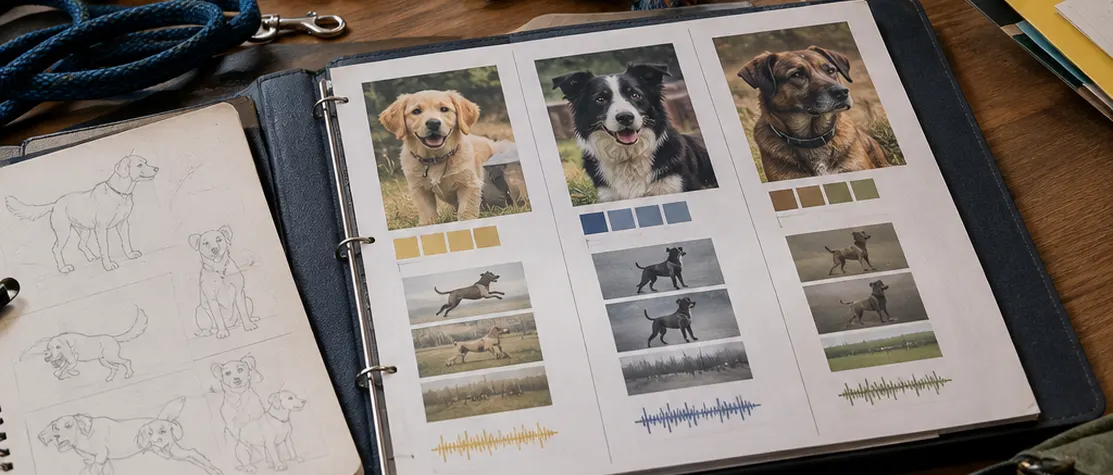
To construct a verifiable profile for each principal, collect one dialogue cue, one sung passage, and one movement instruction alongside their exact source locations. When logging vocal demands, separate the written pitch range, the sustained tessitura, and the comic delivery style into independent columns. A frantic, high-energy belt or barked patter from the toy-breed narrator does not automatically establish a traditional soprano or tenor classification. Dated notes from the creative team's character development workshops indicate that while the 2022 cast script reflects specific vocal placements, regional revivals frequently adapt key signatures to match local ensemble ranges.
Reproducing Physical Vocabulary and Kennel Pacing
Physical comedy in a kennel setting relies on precise spatial geometry. Translating tail-wagging rhythms and anxious kennel pacing into stage choreography requires more than telling an actor to act canine. In the movement ledger, document four data points for every pacing sequence: the starting stage position, the direction of travel, the exact interruption cue, and the final destination. Capturing these four boundaries makes a movement sequence reproducible for future staging teams without inventing unverified choreography.
Beside the canine movement log, maintain a separate column for human entrances. Record the human handler's physical action, the dog's sensory interpretation of that movement, and the resulting comic misunderstanding. This side-by-side tracking reveals how the script's humor emerges from competing realities sharing the same stage floor.
How the Score Drives the Leash: Mapping Musical Numbers to Story Beats
Plot advancement in Pup! A Chew Story lives inside its musical structure rather than its spoken transitions. Mapping the two-act progression requires looking past a simple list of song titles and tracking changes in dramatic circumstances across the score. At the start of every musical entrance, the researcher identifies what the dogs immediately want; at the final cadence, the ledger records how their shelter status or internal pack hierarchy has shifted.
The score alternates between high-tempo ensemble openings—which establish daily kennel routines and the shared mythology of the "Forever Couch"—and introspective acoustic ballads that expose past abandonment or shelter anxiety. Testing this structural contrast against the archival piano-vocal score and reference recordings requires a five-column listening log:
- Act and scene: The structural boundary in the libretto.
- Musical entrance: The vocal or instrumental pickup that launches the beat.
- Immediate objective: What the singing character or pack seeks to achieve.
- Musical or prop cue: The specific orchestration mark or physical trigger inside the number.
- Dramatic consequence: The altered state of the kennel when the number resolves.
When matching a written cue to an archival performance, mark score locations by measure number and audio locations by elapsed timestamp, retaining both locators in the log. Analysts must also distinguish a true tempo change from a shift in orchestration texture. Dropping the percussion and reducing a full kennel chorus to a solo voice over acoustic guitar creates a sharp emotional turn without altering the underlying metronome pulse.
Pacing Tip: Just as major satirical musicals pivot instantly from broad ensemble tap numbers to earnest character confessions, Pup! A Chew Story relies on zero-gap transitions. For every shift from broad comedy to earnest balladry, record the final physical gag, the first emotionally revealing lyric, and whether the instrumental accompaniment continues unbroken between them.
One recurring element to trace through the cue sheet is the "Chew Toy Squeak" leitmotif. Rather than treating the squeak as an unscripted comic sound effect, log every appearance by measure number to see how the orchestrations use percussive props to signal shifts between heightened canine fantasy and adoption-day reality.
Balancing Broad Farce with Real-World Rescue Realities
Stage directors and audiences encountering the script's broad farce face a recurring analytical trap: misreading heightened canine slapstick as a trivialization of actual shelter operations. Because the comedy operates through exaggeration, every shelter-related joke requires a double reading. First, analyze the gag for its immediate theatrical mechanism; second, evaluate the underlying belief about animal behavior the joke might leave with an audience member walking out of the theatre.
Inside its comic misunderstandings, the libretto embeds three distinct animal welfare advocacy threads:
- Post-adoption decompression: The adjustment period a dog requires after moving from a noisy kennel to a private home.
- Behavioral misinterpretation: How human visitors misread barrier frustration or excited jumping as aggression or untrainability.
- Senior dog visibility: The recurring pattern in which older hounds are overlooked during crowded adoption events.
To verify how the production balanced comedy with education during the 2022 run, pair each stage scene with contemporaneous lobby materials from The Great Homecoming. For each of the three advocacy threads, capture the exact stage action, the behavioral interpretation it invites, and the corresponding educational wording printed in the lobby adoption handout. Comparing the theatrical text against official Los Angeles Animal Services adoption guidelines helps dramaturgs see where stage shorthand diverges from municipal shelter procedure.
Advocacy Scope Warning: While our production team consulted Los Angeles pet adoption advocates during development to ground the emotional beats of The Great Homecoming, a ninety-minute theatrical arc compresses multi-week decompression and screening protocols into single songs; verify all runtime figures against a dated program or stage manager's running sheet, and confirm any advocate consultation through archival acknowledgments or correspondence rather than assuming the script functions as a literal training manual.
Establishing a documentary link between the Act Two finale and actual lobby adoption activity requires checking program inserts, curtain-speech transcripts, or dated event schedules. A thematic resemblance between a joyful finale and pet adoption is never enough; the archive must show how the production actively handed the audience off from the theatrical narrative to real-world shelter staff.
Putting the Companion to Work: A Step-by-Step Walkthrough of the 'Meet-and-Greet' Act One Finale
Patrons, educators, and revival directors can apply this archival method to the Act One "Adoption Yard Meet-and-Greet" sequence. The audit links overlapping vocal lines and prop choreography to the lobby orientation materials.
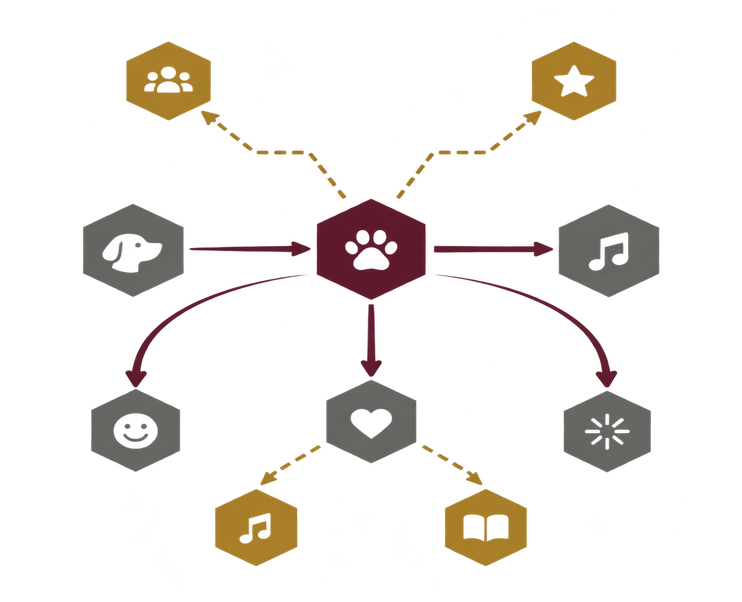
Step 1: Isolate the Scene and Map the Three-Lane Counterpoint
Begin by recording the exact script edition, piano-vocal score revision, prompt-book identifier, and reference audio file at the top of your worksheet. Locate the opening and closing cues that frame the Act One "Adoption Yard Meet-and-Greet" sequence. Construct a three-lane counterpoint map on a single page, assigning separate horizontal lanes to the anxious terrier, the overly enthusiastic retriever, and the hesitant human adopter.
In each lane, mark the character's exact measure of entrance, their immediate dramatic objective, and the measures where their vocal lines overlap. This kennel-to-counterpoint breakdown connects each dog's sensory misreading of the yard directly to a vocal entrance, a physical action, and a shifting adoption expectation.
Step 2: Audit the Measure-48 Chew-Rope Cue
Next, turn to the physical comedy climax inside the yard sequence, centering your inspection on the measure-48 locator. Build a unified cue record that aligns four specific data points side by side:
- The printed tempo marking in the piano-vocal score at measure 48.
- The adjacent italicized stage direction governing the prop chew-rope tug-of-war.
- The stage manager's handwritten call annotation in the master prompt book.
- The matching elapsed timestamp on the archival reference recording.
Maintain strict evidentiary separation during this step: record the composer's written tempo instruction and the stage manager's prompt-book call as independent items. Their close proximity on the page does not by itself prove that the actors' physical tug-of-war dictates the musical tempo change; the audio timestamp and conductor notes must confirm how the pit actually executed the transition in performance.
Step 3: Pair the Scene Resolution with Lobby Orientation Text
Complete the audit by crossing the chew-rope-to-lobby boundary. Transcribe the resolving stage action at the end of the meet-and-greet sequence—where the adopter reacts to the tug-of-war chaos—alongside the exact paragraph from the production's lobby adopter-orientation handout that addresses first-meeting dog behavior. Include the script page locator and the pamphlet page locator for both transcriptions.
Before closing your folder, verify your worksheet against this archival completion sequence:
- Record the script edition, score edition, prompt-book revision, and recording identifier at the top of the ledger.
- Locate and transcribe the meet-and-greet scene's exact opening and closing cues.
- Map the anxious terrier, enthusiastic retriever, and hesitant adopter across three parallel vocal lanes.
- Inspect measure 48 to log the printed tempo mark, prop rope action, prompt call, and audio timestamp as distinct entries.
- Pair the scene's final dramatic resolution with the matching behavioral guidance in the lobby handout.
A completed chew-rope entry, for example, would place the measure-48 tempo marking beside the tug-of-war direction, with the prompt call and recording timestamp in separate fields. The adopter's closing reaction would sit beside the handout's first-meeting guidance, each with its page reference. That pairing makes the comparison specific: what the audience sees played for laughter, and what the lobby text asks them to understand about meeting a dog.