When the Spotlight Hits the Chaos
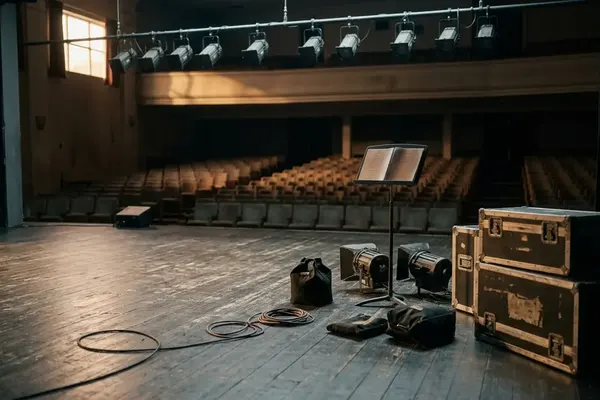
During a rehearsal of a quiet shelter-intake scene, the dog character was meant to settle beside a folded blanket. The adopter would sing about a previous loss, the stage picture would soften, and the scene would proceed toward its expected emotional cadence.
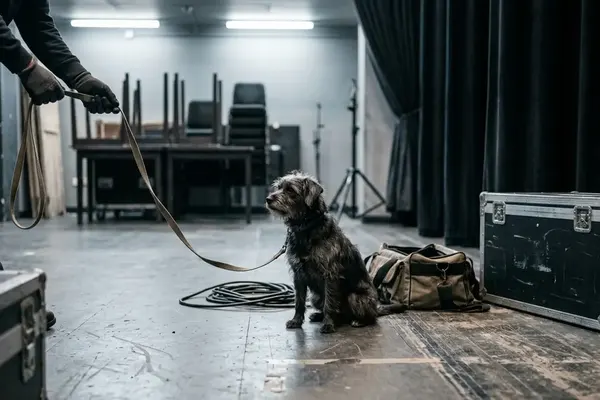
Instead, the performer playing the dog hooked the blanket with one foot and backed across the playing space. The grieving adopter had to follow while continuing the song. A still tableau became a small chase, and the interruption exposed the human character more clearly than another solemn verse could have done.

The disruption test
The moment earned its place because it changed the scene. Apply the folded-blanket interruption test: if the canine disruption can be removed without changing the adopter’s next move, it remains decoration. If the adopter must pursue, bargain, surrender an object, alter the blocking, or revise an assumption, the dog has entered the plot.
Timing matters. Place the disruptive action roughly 20–35 seconds into the serious passage, once the audience understands the emotional premise and before the stage picture grows static. Allow something like 6–10 seconds for the physical interruption and the human character’s first reaction, then return to the musical phrase. That pocket gives the laugh enough room without breaking the song’s emotional line.
Rescue stories naturally invite grief. Musical theatre also asks for surprise, rhythm, appetite, and forward motion. The productive tension lies between those demands. An audience can care deeply about an animal while enjoying the chaos that animal introduces.
Why Pity Runs Out of Music
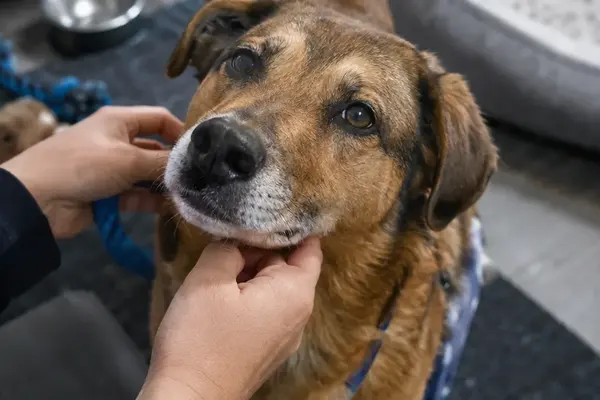
The sad rescue dog can carry an opening image. It rarely carries an entire second act.
I begin the story edit by circling every beat in which a human describes the dog’s suffering while the dog waits passively. Several circles in sequence usually expose a pacing problem: the humans keep making the same emotional argument, and the animal remains a symbol placed beside them.
Audit the sympathy beats
Flag any stretch containing three consecutive appeals for sympathy without a new objective, reversal, joke, or piece of consequential information. In a two-act draft, inspect the first ten minutes or so after intermission with particular care. Repeated pity beats there can make the production feel as though it has restarted an argument the first act already completed.
Reassign one of those beats to the dog as an action. The dog might refuse the offered bed, guard a ridiculous object, interrupt an apology, or choose the least prepared adopter. Each choice converts testimony about rescue into present-tense conflict involving the animal.
Unearned sentimentality also places pressure on the audience. It tells patrons what to feel before the characters have created enough dramatic evidence. When dogs exist solely to receive compassion, advocacy begins to sound like instruction from the stage. Give them preferences and resistance, and the humane point arrives through behavior.
Build a Dog Who Can Change the Scene
A playable canine character needs three things: an objective, an inconvenient habit, and a rule for changing tactics. These elements give the performer clear actions while preserving the animal’s particularity.
Consider a dog who wants access to the lobby, distrusts anyone carrying an umbrella, and escalates from staring to blocking to stealing a glove. The adopter now faces a practical problem. A speech about compassion cannot open the route or recover the glove; the human must observe, adapt, and earn progress.
Write escalation in threes
- Begin with a readable refusal. The dog turns away from the leash, bed, photograph, or person selected by the humans.
- Increase the obstruction. The dog blocks an exit, claims an object, or redirects attention toward an inconvenient target.
- Finish with a consequential choice. The final action forces a new line, new blocking, or a different musical cue.
Leave two to four spoken lines between repeated canine interventions. The audience needs enough space to recognize the pattern, yet excessive repetition makes the dog feel like a mechanical gag. Variation helps: a stare, a physical block, and an act of theft read as an escalating strategy rather than the same joke performed three times.
During a scene pass, examine every entrance and interruption. Ask who must react and what becomes impossible afterward. The same standard applies to human and animal characters: each should push the plot somewhere it would not otherwise go.
This distinction becomes especially useful when comparing theatrical styles. The tonal contract of a rescue musical differs sharply from the aggressive satire associated with The Book of Mormon. Here, canine comedy gains force through recognizable preference and human misreading. The dog does not need a verbal punch line; choosing the wrong suitcase can reorganize the whole room.
Let the Laugh Protect the Truth
Humor can disarm an audience before an emotional turn, provided the joke has the right target. Aim it toward mismatched expectations, human vanity, shelter bureaucracy, and canine specificity. Keep abandonment, fear, and stress responses outside the punch line.
A confident volunteer might launch an overprepared welcome number while the dog repeatedly chooses an empty cardboard box over every carefully arranged comfort item. The comic engine comes from the volunteer’s certainty and the dog’s unmistakable preference. Once the room opens through laughter, a quieter lyric can reveal why the volunteer needs the placement to succeed.
The laugh-before-the-leash boundary
Comedy may expose human assumptions and canine choices. It must never make shelter fear, abandonment, or an animal’s distress the object of amusement. That boundary is narrow enough to require close rehearsal-room judgment, especially when physical business changes tempo.
After a large laugh or physical payoff, protect a few seconds of reset before an emotionally important lyric. Without that pause, laughter can cover the first words and weaken the tonal turn. In a scene running six to nine minutes, one substantial shift usually reads more clearly than alternating comedy and grief after every line.
Live adoptable animals require another layer of planning. Comic timing cannot depend on a dog repeating a cue. Build a safe, human-led route through the scene whether the animal sits, wanders, vocalizes, or disengages. The human performer can absorb the variation, redirect the action, and preserve the musical structure without treating the animal’s uncertainty as comic material.
That calibration earns trust in the house and among the people doing rescue work. The production acknowledges difficult realities while allowing delight to remain part of the rescue story. Compassion lands more honestly when the audience has met a dog with tastes, habits, and the power to surprise.
Rewrite One Sympathy Beat Today
Take a current scene and read it once with only the dog’s actions visible. Remove every description of what the humans feel about the animal. List what the dog actually changes.
A focused scene pass
- Select one moment that currently asks only for sympathy.
- Give the dog one active choice with an immediate consequence: reject the offered leash, claim the wrong suitcase, interrupt the adoption photograph, or lead one human toward another.
- Make that choice block the easiest human solution.
- Retain the revision only if it changes the blocking, dialogue, or next musical cue.
Complete the first rewrite in a single focused half-hour pass. Then test it aloud, with one reader handling the human dialogue and another calling the dog’s actions. Listen for the exact instant when the humans must abandon their prepared response.
Open your current draft now, find one purely sympathetic canine beat, and rewrite it so the dog makes a disruptive choice that forces the next human action.