Why Crisp Consonants Beat a Showstopping High Note in Canine Comedy
In a comedy-driven musical pet adoption event like Pup! A Chew Story, a meticulously articulated consonant does far more work for the audience than a sustained high belt. The primary purpose of the musical is to build an immediate emotional and comedic bridge between the performers on stage and the shelter pets waiting to meet potential families during The Great Homecoming events. When the audience misses a joke about chew toys or shelter life, that connection weakens.
A common tension emerges during cast rehearsals. Performers are frequently trained to showcase vocal power and wide vibrato. While vibrato is not inherently unintelligible, the practical concern is whether sustained vowels, pitch movement, or accompaniment obscure the brief consonant transitions that distinguish a joke's words. In rapid-fire comedic lyrics, prioritizing sheer vocal bloom over crisp articulation buries the humor.
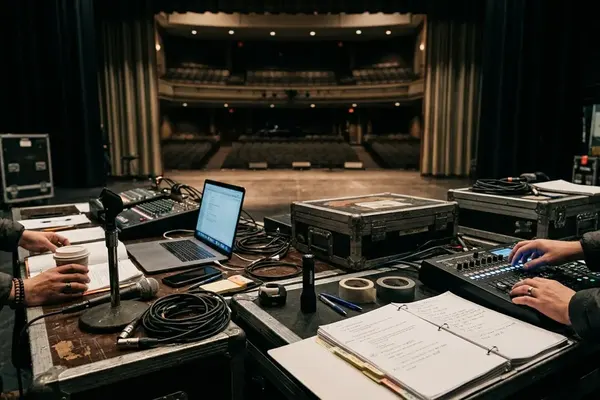
To keep the adoption event's storytelling purpose ahead of an isolated vocal showcase, lyric comprehension must serve as the first rehearsal criterion. Rather than judging a passage from the piano bench, place a listener unfamiliar with the text in the audience area and run a single rhyming couplet. After the pass, ask two concrete rehearsal prompts:
- "What did the dog do?"
- "Which words made that funny?"
Have the listener identify the dog's intention and repeat the joke's payoff without consulting the script. The cast and creative team should select the delivery that clearly communicates both answers, rather than the delivery with the longest sustained note.
How Over-Singing Swallows the Comedic Turn in the Rehearsal Room
When a punchline fails to register in the rehearsal room, the loss is rarely mysterious. Acoustic and physical mechanics explain why theatrical vocals swallow words. Final plosives like /p/, /t/, and /k/ require both an articulatory closure and a distinct release. Extending the preceding vowel until the next syllable arrives leaves less time for those brief acoustic events to occur. At the same time, jaw tension can restrict articulatory movement during rising melodies, though it is not an inevitable consequence of singing high notes. Finally, taking an anticipatory breath right before a big vocal finish interrupts the grammatical connection immediately before the payoff.
To isolate the problem, compare the same couplet at the same tempo in two deliveries: a sustained, full-resonance version and a speech-led version that retains the written pitches. Delivering a patter line about a dog's internal monologue with full operatic resonance often stretches vowels across beat boundaries. A forward, speech-level placement preserves the rhythmic edges of the text without abandoning musicality. Reduced resonance is not the goal; the decision is about preserving intelligible word boundaries.
Creative Diagnostic Window: Listen specifically to the final three words of a rhyming couplet to determine whether the loss of clarity occurs at the word ending, the breath, or the accompaniment entrance.
Using those final three words as a diagnostic window in an illustrative couplet shows exactly where a singer's habit of prioritizing vocal bloom overrides the crisp cutoff required for the laugh to land. Marking the breath before the phrase, rather than gasping immediately before the final three words, keeps the comedic thought intact.
Taming Accompaniment Levels So the Audience Never Has to Strain
Even pristine diction gets buried if the piano or rhythm section plays through the vocal frequency range during a comedic setup. Before asking an actor for more volume, the musical director should evaluate the arrangement from the audience area so an accompaniment problem does not turn into an instruction to shout. When the pit carves out acoustic pockets around key rhymes, performers can use natural, expressive vocal nuance and comic timing.

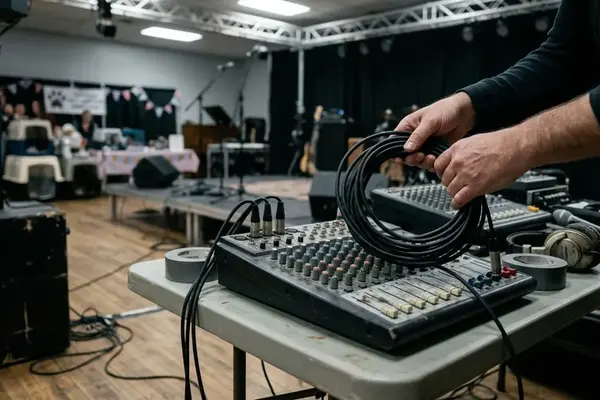
In rehearsals for the musical, the musical director should mark the setup, the rhyme word, and the intended laugh space directly in the score before changing the arrangement. During the comparison passes, keep the singer's microphone setting unchanged so the accompaniment edit can be judged separately from a sound reinforcement level adjustment.
Score Adjustments for Comedic Clarity
- Pull back relative dynamics: Mark the rehearsal accompaniment piano rather than mezzo-forte beneath conversational setups. These markings indicate relative musical dynamics for the player, not fixed sound-pressure levels.
- Thin the chord density: Remove left-hand octave doubling or heavy repeated bass chords during dense lyrical passages, while separately checking whether right-hand block chords compete with the singer's pitch range.
- Write the silence: Place an explicit written rest at the punchline's landing point rather than relying on the pianist to infer a pause from the actor's stage expression.
Walking Through a Four-Bar Rehearsal Fix from Muddy Belt to Clean Laugh
To put these adjustments into practice, walk through a four-bar passage in 4/4 time at a rehearsal tempo of quarter note = 120–132. Because this scenario is a constructed practice specification rather than a documented production score excerpt, you can apply its exact mechanics to any fast comedic patter in your own rehearsal room. The lyric runs across four bars:
- Bar 1: "I didn't eat"
- Bar 2: "your favorite slipper"
- Bar 3: "I came to help"
- Bar 4: "install a zipper."
In the initial muddy pass, the performer slides into a rising setup note in bar three, stretches the vowel on "help," and carries that sustained sound directly into bar four while the piano plays heavy, sustained block chords. The slipper-to-zipper breakdown is immediate: you can trace the missing laugh through the swallowed /t/ in "eat," the lost /p/ in "help," and the dense piano chord covering the payoff's final three words, "install a zipper."
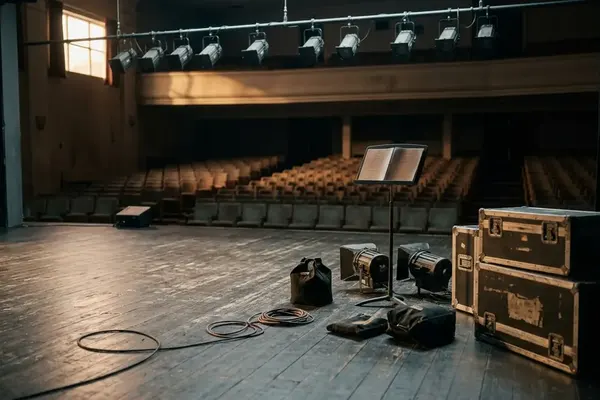
Start the fix at the music stand in bar three. Replace the pianist's sustained block chords with dry, staccato eighth-note pulses through beat three, leaving beat four completely silent. Instruct the pianist to keep off the sustaining pedal across that beat-four rest so the room clears acoustically right before bar four begins.
In the corrected pass, the singer gives the /t/ in "eat" (bar one) and the final /p/ in "help" (bar three) audible, crisp releases before their following rests without adding an extra shadow vowel like "eat-uh" or "help-uh." The breath comes before bar three begins, so no gasp breaks the phrase between "help" and "install." The zipper-before-fireworks boundary is now clear: the actor delivers "install a zipper" in bar four with strict metric clarity on a narrow, speech-led placement. The silent beat that follows leaves room for the laugh, with any vocal flourish saved for the next theatrical moment after the audience responds.