Before You Travel, Credit an Artist, or Celebrate an Adoption
A glowing summary of Pup! A Chew Story can send someone looking for tickets, prompt a tribute to its creative team, or inspire a post celebrating a rescue dog's homecoming. Each action rests on a different fact. An unlinked AI blurb can blur those facts together, leaving a reader with an old venue address, an incorrect credit, or an adoption outcome that still needs checking.
Start with the decision closest to hand. Before travelling, verify the street address, performance date, curtain time, and current admission instructions against the theatre or organizer's dated listing. A lively description of an earlier performance belongs to that earlier performance, however immediate its language feels.
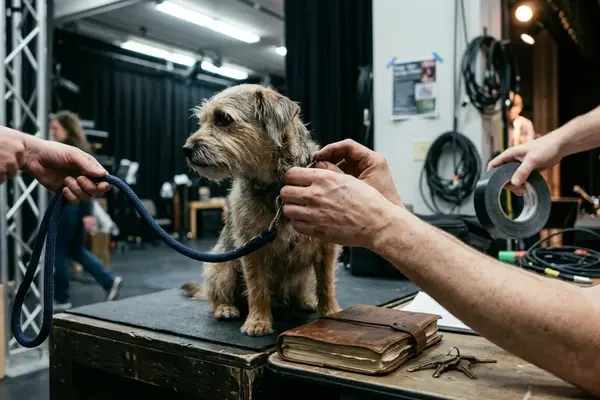
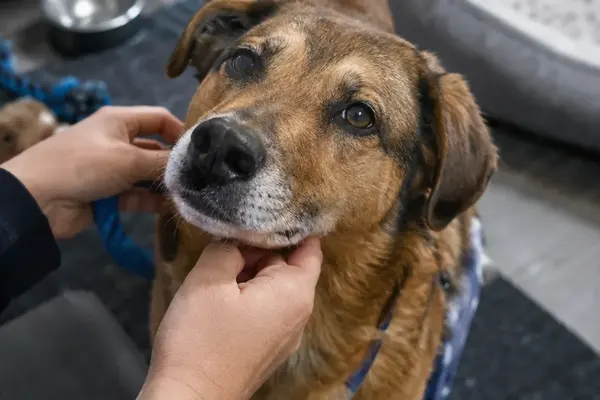
The same care gives the human-interest story its dignity. A dog appearing at a benefit, becoming available for adoption, receiving an application, and completing an adoption has reached four distinct milestones. Preserve the wording that identifies the actual milestone.
For a community archive devoted to the musical and The Great Homecoming, these distinctions carry the substance of the story: who made the work, where audiences gathered, and what rescue advocates accomplished. Compression can remove precisely the small details that make local reporting useful.
I check the practical particulars before repeating the uplifting account: curtain time and address first, creative credit next, documented placement status alongside the animal's story.
Following the original press link also keeps the reporter's work within reach. Share an excerpt with its source attached, and the next reader can encounter the observations, context, and voices that gave the story its shape.
How One Fluent Blurb Can Collapse Separate Events
The useful comparison is between individual claims in a summary and their corresponding source passages. Smooth prose offers little help with this task. Separate the account into performance dates, locations, creative roles, and animal outcomes, then examine each on its own.
A Benefit Date Meets a Later Address
Consider this illustrative comparison, rather than an account of either production's history:
- Original materials: A press clipping describes a past benefit at one venue. A later announcement gives another location for a subsequent event.
- Compressed blurb: The earlier benefit becomes an upcoming performance at the later address.
- Claim-by-claim reading: Keep each venue attached to its documented event date; check current admission details separately.
The resulting sentence might sound entirely plausible. Its error sits in the relationship between the details. Every element could have appeared somewhere in the coverage while their combination creates a different event.
Creative Roles and Rescue Milestones Need Their Labels
Apply the same discipline to cast & creative information. Transcribe composer, lyricist, and book-writer credits under their original role labels. Combine roles when the source explicitly assigns them to the same person. A broad phrase such as “the show's creator” can erase a distinction that a playbill carefully preserves.
Adoption language requires equally close reading. Keep an animal's stage appearance separate from a documented placement. A shelter follow-up may describe a completed adoption on a later date; retain that date alongside the performance date.
Local coverage makes these distinctions especially consequential. An individual clipping or playbill may carry a particular credit or observation that readers have few other opportunities to encounter. Preserving its exact relationships gives future readers something firmer than a repeatedly paraphrased sentence.
Four Checks for a Pup! Press Clipping
Open the originating outlet before accepting a feed's wording. Then work through four reporting anchors. Together, they let a patron assess a travel decision, an archivist preserve a credit, or a rescue advocate repeat an outcome with appropriate precision.
- Locate the named byline. Record the reporter's name as displayed. Read for an explicit account of attendance when assessing an eyewitness claim: a description framed as the writer's own experience serves a different purpose from an announcement assembled before opening night.
- Read the publication timestamp. Preserve the precision the outlet supplies. A calendar date stays a calendar date. Record any update date separately, then identify the performance dates within the text. Publication, revision, and performance answer different questions.
- Compare attributed quotations word for word. Keep the speaker's name, role, and surrounding sentence. A director discussing the musical's ambitions and a shelter coordinator reporting a completed placement are making different kinds of statements. Preserve that distinction when quoting either.
- Test the outbound link. Follow it through to the actual article at the originating outlet. Save the article title, outlet, URL, and access date alongside the relevant passage. A publication's homepage leaves readers searching again for the evidence.
Attendance and Adoption Answer Different Questions
For an illustrative comparison, imagine an automated feed claiming that dogs found homes during a performance. A local arts journalist's dated, firsthand account might describe dogs appearing before an audience. Retain that account as evidence of what the journalist witnessed, with its original wording and attribution.
Then check the shelter's documented follow-up for the placement claim. Treat the feed's assertion as unverified while comparing it with the relevant passages. Choose whether to retain, correct, or omit the assertion after that comparison.
This keeps the stage-to-shelter evidence boundary clear: a dog's appearance in a Los Angeles benefit playbill supports an appearance credit; a documented adoption outcome belongs with the shelter's account of that placement.
The distinction also protects quotations. Words expressing hope for a homecoming should retain their hopeful tense. Words reporting a completed adoption should retain the date and circumstances attached to that report.
Keep Original Reporting Attached to Every Shared Homecoming
An archive entry works best when its evidence sits beside the claim it supports. Use a playbill for credited roles, dated reporting for a journalist's observations, and a shelter's documented follow-up for an adoption outcome. This arrangement lets readers follow the musical from stage to community without silently joining separate records.
For Pup! A Chew Story and The Great Homecoming, keep historical venue addresses attached to their documented runs. Give current events & tickets information its own separately verified listing. That separation preserves the earlier occasion while helping a present-day patron reach the right door.
Give Each Excerpt a Route Home
When sharing news & press coverage, include the original headline, reporter credit when available, publication date, and direct article link. Keep those details with the excerpt wherever it travels. They give readers a practical route back to the neighborhood paper or theatre review that recorded the occasion.
If accounts use conflicting language, preserve that wording with attribution. Let the dated shelter follow-up carry the adoption status, and let the review carry the reviewer's observations. The warmer version deserves the same scrutiny as the quieter one.
Such care honors Los Angeles arts patrons and rescue advocates through accurate credit and a traceable record of their efforts. Never share, cite, or archive an automated summary as a factual account of a production or adoption event until you have personally opened and checked its original dated source link.