What a Rescue Dog Adoption Fee Is—and Why It Rarely Equals the Clinic Ledger
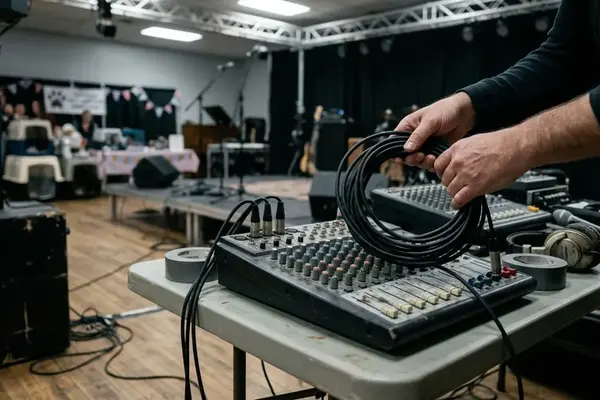
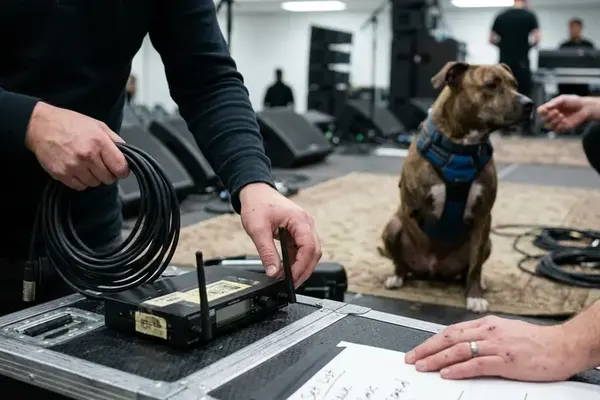
A rescue dog adoption fee is a preset, pooled cost-recovery contribution collected at the transfer of ownership to offset aggregate clinical and logistical overhead. It functions as a shared operational subsidy, while an itemized clinic invoice reflects the exact retail price of veterinary procedures performed on an individual animal. When prospective adopters attend a showcase or theatrical adoption event, the flat fee on the placard often prompts a structural question: does a standardized charge represent a retail markup on a seemingly healthy dog?
Look at the underlying clinical ledger and the opposite reality emerges. Every animal entering a shelter or rescue pipeline requires immediate intake triage, biosecurity clearance, and foundational medical care before ever stepping onto an adoption stage.
Intake cannot wait until an adopter commits. The moment a dog arrives via transport, operations teams incur direct clinical expenses—examinations, diagnostic assays, therapeutics, and surgical consumables—alongside daily logistical costs for sanitation supplies, specialized nutrition, climate-controlled housing, and administrative record management. Triage protocols immediately separate animals requiring acute medical stabilization from those cleared for routine preventive processing. Every single dog undergoes physical assessment and infectious-disease mitigation, even if only a subset demands emergency intervention.
Because direct clinic invoices rarely capture donated veterinary labor, foster supply distributions, or shared facility overhead, comparing a single dog's transfer fee to a standard veterinary bill distorts the financial picture. Furthermore, an animal's presence at a public adoption showcase indicates a placement judgment based on behavioral suitability and stable health management, which remains completely distinct from total medical completion. A rescue dog can be cleared for transfer while still managing a disclosed, ongoing therapeutic regimen.
Transfer Fee Realities
Fee structures, clinical intake protocols, and legal transfer requirements vary across organizations and jurisdictions, meaning an adoption fee or showcase appearance never guarantees completion of a universal veterinary package; adopters must audit the individual medical dossier directly.
The Baseline Clinical Protocol Every Dog Completes Before the Adoption Floor
Before any canine candidate enters a high-density adoption venue, the clinical pipeline executes a structured diagnostic and prophylactic sequence designed to protect both the individual animal and the broader event population. Intake begins by cross-referencing any available history with an initial identification scan and a thorough physical examination. Clinical findings at this gate dictate immediate isolation protocols and diagnostic priorities.
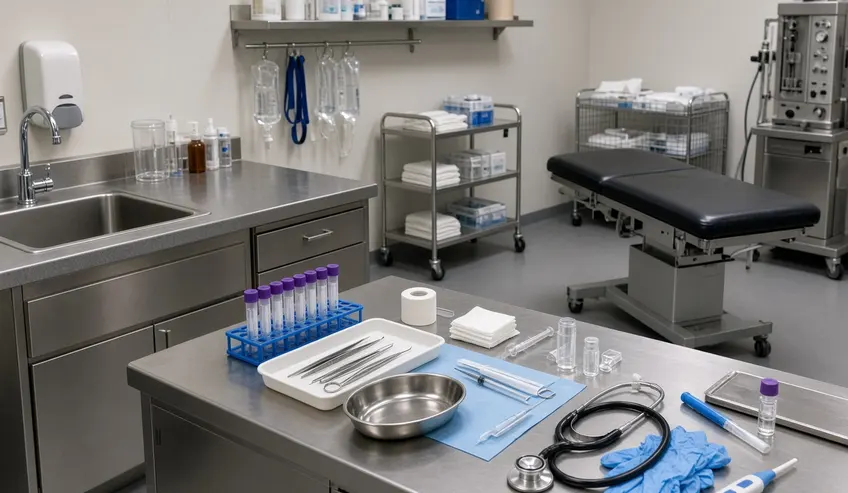
Diagnostic screening targets three distinct biological systems, each requiring specific clinical interpretation:
- Heartworm Evaluation: Point-of-care heartworm antigen assays detect circulating proteins associated with adult female heartworms. Because an antigen test alone will miss immature infections, full protocols pair it with microfilariae testing to evaluate the bloodstream for larval stages.
- Vector-Borne Pathogen Panels: Tick-borne disease screenings detect either host antibodies or pathogen antigens depending on the specific assay architecture. A reactive screening result requires clinical correlation by a veterinarian to distinguish prior exposure from active systemic disease.
- Gastrointestinal Parasite Assays: Fecal flotation microscopy and fecal antigen testing identify different biological markers of enteric parasitism. Because standard broad-spectrum anthelmintics do not eradicate every protozoan or helminth species—and external ectoparasite preventives do not clear intestinal infections—targeted deworming relies on accurate fecal diagnostics.
Once diagnostic baselines are established, the immunization sequence begins. Core canine vaccinations recommended for shelter and rescue intake include rabies, canine distemper virus, canine adenovirus-2, and canine parvovirus, administered in accordance with the AAHA canine vaccination guidelines and statutory rabies mandates. For dogs preparing to enter public adoption events, risk assessments typically trigger non-core mucosal or parenteral prophylaxis against Bordetella bronchiseptica and canine influenza virus. Chemical prophylaxis never replaces physical biosecurity; vaccination lowers shedding and clinical severity, yet strict physical separation remains mandatory for any dog exhibiting upper respiratory symptoms.
The baseline surgical and identification phase concludes the routine intake block. Surgical sterilization—most commonly ovariohysterectomy or orchidectomy, alongside alternative techniques where clinically indicated—consumes substantial veterinary resources even within high-efficiency shelter medicine models. Every procedure requires pre-anesthetic evaluation, general anesthesia, physiological monitoring, multimodal analgesia, and sterile surgical packs. While the patient is under anesthesia, clinicians frequently implant an ISO-standard 15-digit microchip. Implantation installs the passive radio-frequency hardware, though the device only functions as a recovery tool once the unique identifier is linked to owner contact data in an active registry database.
When Routine Intake Escalates into Dental and Orthopedic Reconstruction
When physical assessment uncovers pathology beyond preventive care, a dog diverges from the baseline track into an intensive diagnostic and reconstructive pathway. The resource consumption between a routine preventive intake and a complex rehabilitative case represents one of the widest cost variances in shelter medicine.
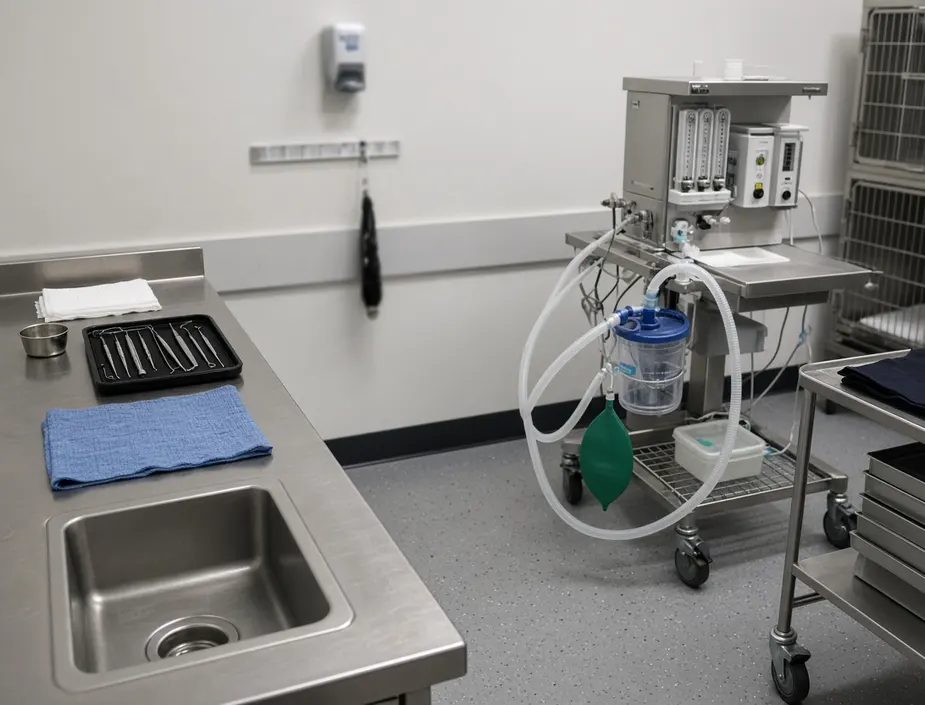
Consider oral pathology, a frequent finding in neglected or stray populations. A visual awake exam only reveals supragingival calculus and obvious crown fractures. True dental rehabilitation requires general anesthesia, full-mouth dental radiographs to expose subgingival abscesses or root resorption, ultrasonic scaling, and surgical extraction of periodontally compromised teeth. Complex extractions demand mucogingival flap creation, alveolar bone removal, local nerve blocks, absorbable sutures, and postoperative analgesic protocols.
Musculoskeletal lameness triggers a similarly intensive escalation. An abnormal gait prompts orthogonal radiographs under sedation to localize joint instability or traumatic fracture. Two common surgical interventions illustrate how specific pathology dictates the clinical input:
- Cranial Cruciate Ligament Stabilization: Addresses stifle joint instability caused by ligament rupture or degeneration, requiring specialized implants or biomechanical osteotomies to restore weight-bearing geometry.
- Femoral Head Ostectomy (FHO): Excises the femoral head and neck to eliminate painful bone-on-bone contact in cases of severe coxofemoral luxation, capital physeal fracture, or end-stage hip dysplasia.
These two orthopedic procedures solve entirely different anatomical failures and demand strict postoperative management inside foster homes or medical wards. Recovery entails weeks of crate confinement, controlled leash walks, incision monitoring, and targeted physical rehabilitation, with progress governed by serial veterinary reassessments of wound healing and limb function.
Chronic dermatological and ophthalmic conditions add another layer of specialized overhead. Persistent dermatitis requires skin scrapings, impression smears for cytology, fungal cultures, and iterative systemic or topical medication adjustments. Ocular anomalies call for Schirmer tear testing, fluorescein corneal staining to map ulceration, and tonometry to measure intraocular pressure. While a healthy intake draws primarily on preventive vaccines, standard diagnostics, and routine sterilization, a single reconstructive patient consumes advanced imaging, prolonged anesthesia, surgical hardware, repeat clinician evaluations, and weeks of specialized housing before reaching adoption readiness.
How Flat Pooled Fees Prevent Pricing Medical-Needs Dogs Out of a Home
If rescue organizations operated on an itemized cost-pass-through model, every diagnostic test, surgical extraction, and day of medical boarding would attach directly to the animal's final transfer bill. Under that accounting structure, the clinical ledger would dictate the adoption price.
An itemized pass-through system fails animal welfare logistics immediately. Billing adopters for actual clinical outlays would attach insurmountable price tags to senior dogs, heartworm-treated survivors, and orthopedic patients, pricing vulnerable animals out of placement even though those clinical investments make them no less capable as companions. Conversely, young dogs requiring only baseline preventive processing would be commodified as bargain inventory—even though they still consume transport fuel, facility sanitation, nutrition, and administrative labor that prevent any single intake from being automatically self-funding.
Pooled Budget Mechanics
Cost pooling operates strictly as an internal shelter budgeting mechanism to distribute financial exposure across an intake cohort, relying on philanthropic grants and public donations to close the deficit between aggregate veterinary expenditures and collected transfer fees.
By implementing a flat or narrow age-tiered fee schedule, operations teams decouple an individual dog's clinical history from its transfer contribution. When an adopter pays a standard fee for a dog that moved swiftly through baseline intake, a portion of that contribution helps offset the shared operating load, while individual donations and sponsorships absorb the heavy deficit left by complex dental and orthopedic cases. Partial cost recovery keeps the clinical pipeline supplied with sterile consumables, diagnostic cartridges, and anesthetic gases for the incoming transport cohort, preventing adoption showcases from devolving into medical debt auctions.
The Clinical Documentation You Must Collect at the Adoption Handoff
When you sit at the handoff table to finalize an adoption agreement, your primary objective is verifying that the animal's physical identity matches a complete, actionable medical dossier. Neither a paid fee receipt nor a verbal summary substitutes for primary clinical records. Before departing the venue, audit the transfer packet against these mandatory documentation standards:
- Signed Rabies Vaccination Certificate: Verify that the document carries a licensed veterinarian's signature, the dog's physical description, the exact date of administration, the vaccine manufacturer and serial or lot number, and the duration of immunity. Note that a metallic rabies collar tag number and a vaccine lot number serve distinct tracking functions; you need the full certificate for municipal licensing.
- Immunization and Prophylaxis Ledger: Collect the exact administration dates, specific product names, and lot numbers for all core and non-core vaccines (distemper, adenovirus, parvovirus, Bordetella, influenza), alongside the due dates for subsequent boosters. Confirm whether a single documented dose represents a completed primary series or an initial priming dose requiring follow-up within weeks.
- Dated Diagnostic Reports: Secure the actual laboratory or point-of-care test reports showing specimen collection dates and specific assay results for heartworm antigen, microfilariae, tick-borne panels, and fecal examinations. An undated summary sheet stating that a dog was "tested negative" does not establish which assay was run or whether pending external test results still require follow-up.
- Surgical Sterilization Summary: Obtain the operative report detailing the specific sterilization procedure performed, anesthesia protocols, any intra-operative complications, postoperative activity restrictions, and instructions regarding external suture removal or incision rechecks.
- Microchip Verification and Registry Instructions: Ask the transfer coordinator to scan the dog in your presence and verify that the 15-digit ISO numeric readout on the scanner matches the number printed on the adoption contract and medical file. If the dog arrived with a pre-existing chip, ensure the organization has identified the legacy registry manufacturer, and collect the exact documentation required to execute the ownership transfer in that database.
- Active Medication and Preventive Schedules: For every ongoing therapeutic drug, anthelmintic, or heartworm and ectoparasite preventive, record the exact generic and brand name, milligram strength, prescribed dose, route of administration, frequency, timestamp of the last administered dose, and the scheduled date for the next dose. Relying on a bare drug name without dispensing labels or dosing logs risks dangerous double-dosing or lapses in prophylactic coverage.
Once you verify that the microchip scan matches the paper dossier and separate completed procedures from pending boosters or active medications, the operational responsibility shifts to your household. When you leave the handoff table with those clinical records in hand, will you schedule your primary-care veterinarian's baseline transition exam within approximately 72 hours to reconcile the preventive calendar and assign any unfinished care to a dedicated clinician, or wait until an unverified gap in the paperwork forces an unplanned diagnostic visit?